

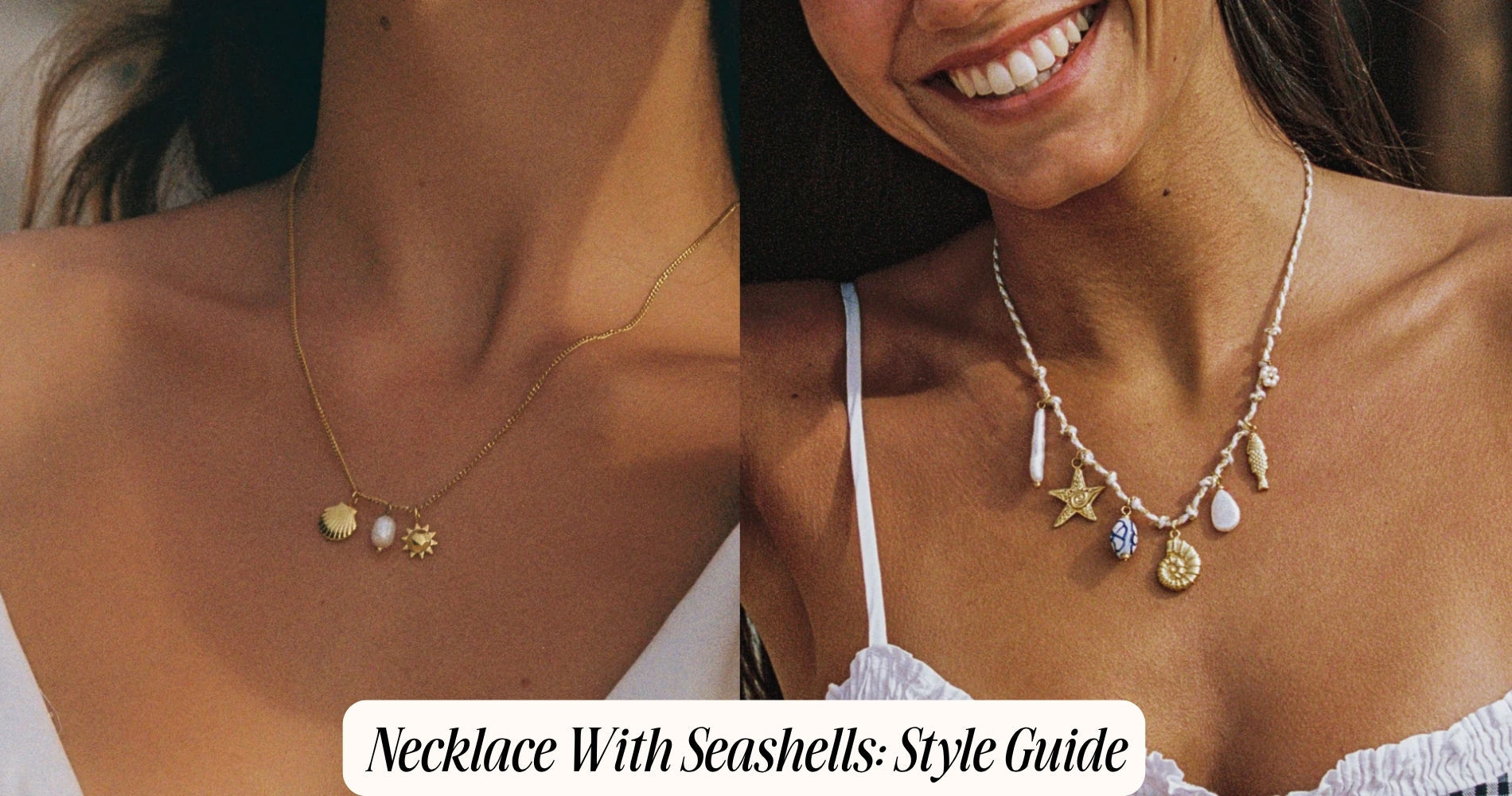
Necklace With Seashells: Style Guide
A necklace with seashells reads as effortless coastal style, but choosing the right one involves more than picking whatever shell shape catches your eye first. The shell type, chain material, length, and construction all affect how the piece looks, wears, and holds up over time. Summer Jewelry includes several shell-inspired styles built around exactly these considerations. This guide covers the main shell necklace styles available, how to choose the right chain and length, which outfits and occasions suit shell necklaces best, and how to keep a piece looking good through the conditions it is most often worn in.
Types of Shells Used in Necklaces
Shell necklaces fall into a few recognizable categories based on the shell type and how it is incorporated into the design, and knowing the difference helps you shop with a clearer sense of what you actually want.
Puka shell necklaces use small, naturally occurring shell fragments and beads, traditionally sourced from Hawaii, strung together in a continuous strand. This is one of the most classic and widely recognized shell necklace styles, associated closely with casual beach and surf culture.
Cowrie shell necklaces feature the distinctive rounded, glossy cowrie shell, either as a single pendant or as multiple shells strung along a chain or cord. Cowrie shells carry a long history of cultural significance in addition to their visual appeal, which makes this style meaningful to many wearers beyond its aesthetic alone.

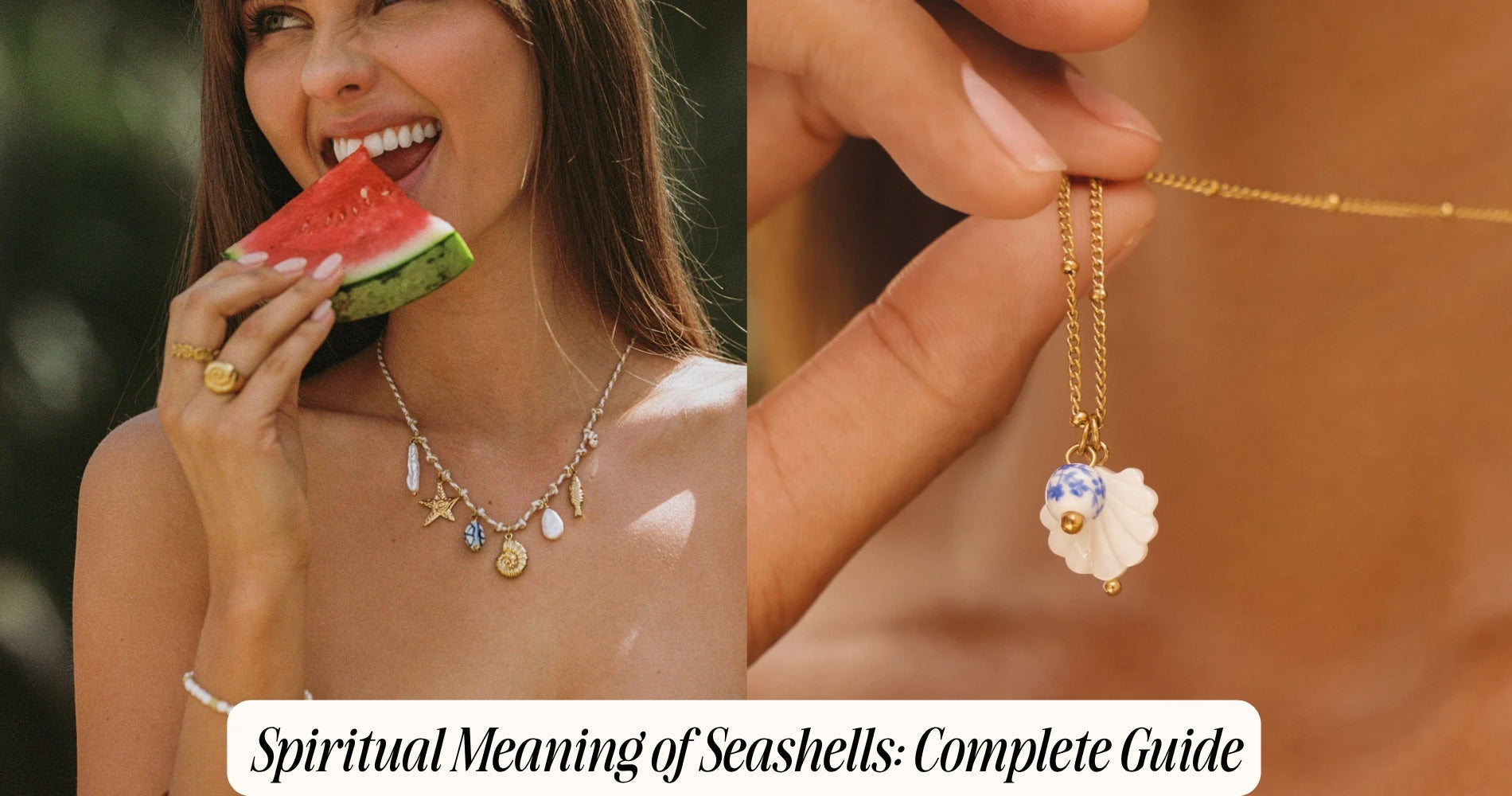
Scallop and clam shell pendants use a single, larger shell shape as the focal pendant on a simple chain, often left in a natural or lightly polished finish that highlights the shell's ridges and coloring.
Shell fragment and chip necklaces incorporate small, irregular shell pieces, sometimes mixed with beads or small charms, creating a more textured, layered look rather than a single defined shell shape.
Metal shell-motif necklaces use metal, gold or silver toned, formed into a shell shape rather than incorporating an actual shell. These read as more polished and versatile than natural shell pieces, since they pair more easily with a wider range of outfits and occasions, and they avoid some of the durability considerations that natural shell material involves.
Choosing the Right Chain for a Shell Necklace
The chain or cord a shell pendant hangs from affects both the overall look and how well the piece holds up to regular wear.
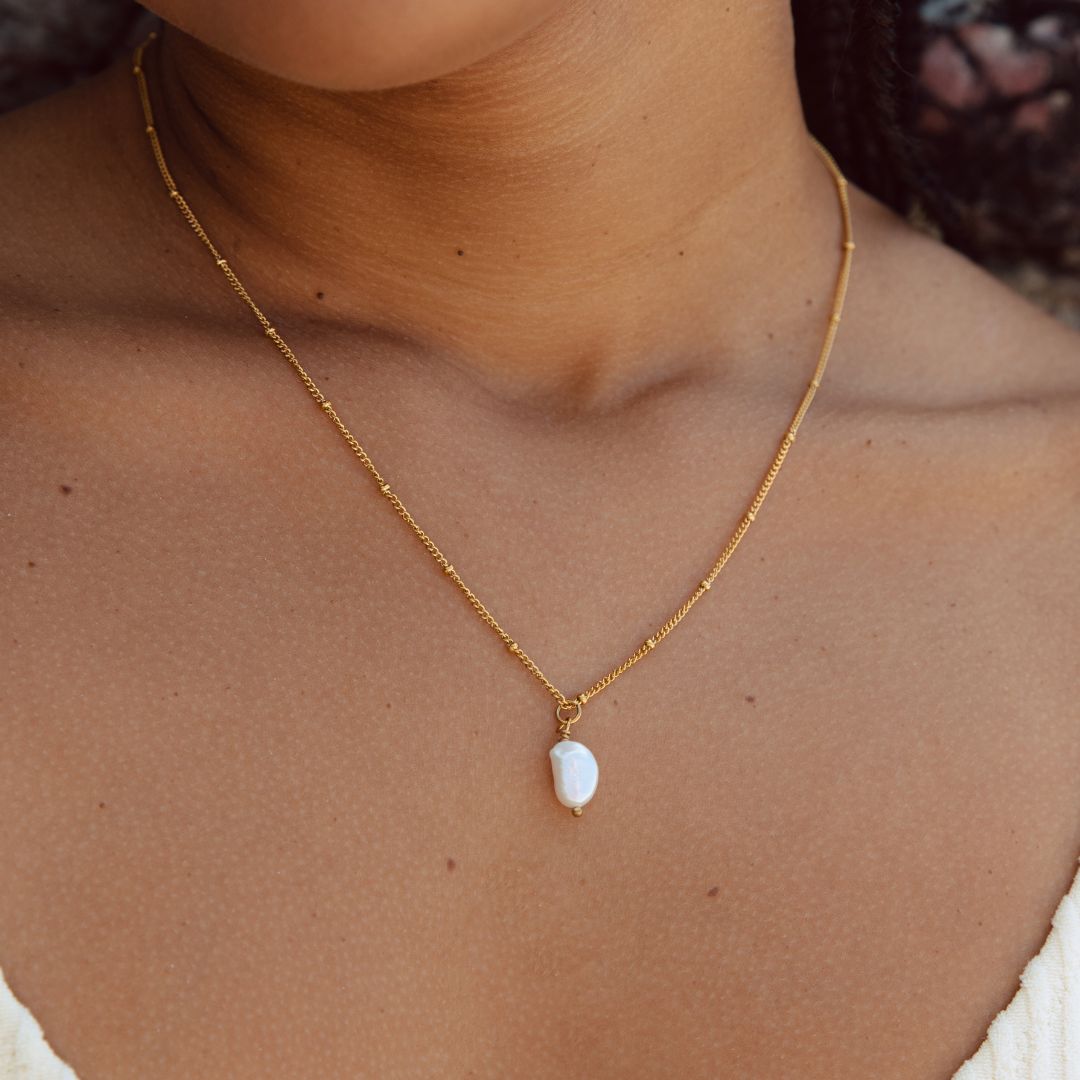
Fine metal chains, typically in gold or silver tone, create a more polished, versatile look that works for both casual and slightly dressed-up contexts. This pairing suits a single shell pendant, whether a natural shell or a metal shell motif, and reads as more considered than a cord-based necklace.
Cord and rope styles, often in natural fiber, leather, or waxed cord, create the more classic, casual beach aesthetic most associated with puka shell and fragment-style necklaces. These suit a relaxed, sun-and-sand context specifically and generally read as more casual than a metal chain equivalent.
Beaded chains, combining small beads with shell elements along the same strand, add color and texture variation, and work well for layered, bohemian-leaning styling where multiple textures and materials are part of the intended look.
For a piece meant to transition between beach days and everyday wear without changing necklaces constantly, a fine metal chain with a shell pendant offers the most flexibility, since it reads as intentional jewelry in both casual and slightly more polished contexts in a way that a cord necklace generally does not.

Length Considerations for Shell Necklaces
Shell necklace length affects both the visual weight of the piece and how it interacts with different necklines.
A shorter length, around 16 to 18 inches, sits at or just below the collarbone and suits a single shell pendant well, keeping the focal point close to the face where it reads clearly. This length works particularly well with open necklines common in summer clothing, including scoop necks and off-shoulder tops.
A longer length, 20 to 24 inches, allows a shell pendant to sit lower on the chest, which suits both layering with other necklaces and pairing with higher necklines like crew neck tops or swimsuit coverups where a shorter length might sit awkwardly close to the fabric edge.
For puka shell and fragment-style strands specifically, slightly longer lengths in the 18 to 22 inch range are traditional and tend to suit the fuller, more textured visual weight of a continuous shell strand better than a very short choker length would.
| Necklace Style | Best Length | Best Chain Type |
|---|---|---|
| Single shell pendant | 16 to 20 inches | Fine metal chain |
| Puka shell strand | 18 to 22 inches | Cord or fine chain |
| Cowrie shell (single) | 16 to 18 inches | Fine metal chain or cord |
| Shell fragment mix | 18 to 22 inches | Beaded chain or cord |
| Metal shell motif | 16 to 20 inches | Fine metal chain |

Styling a Necklace With Seashells
Beach and resort wear is the most natural context for shell necklaces of any style, particularly puka shell and cord-based pieces, worn over swimwear, a light cover-up, or simple linen clothing where the piece reads as an integrated part of a relaxed, coastal look.
Casual everyday outfits suit a single shell pendant on a fine metal chain particularly well, since this combination reads as intentional jewelry rather than purely beach-specific, working with a simple t-shirt, a sundress, or denim just as easily as it does over a swimsuit.
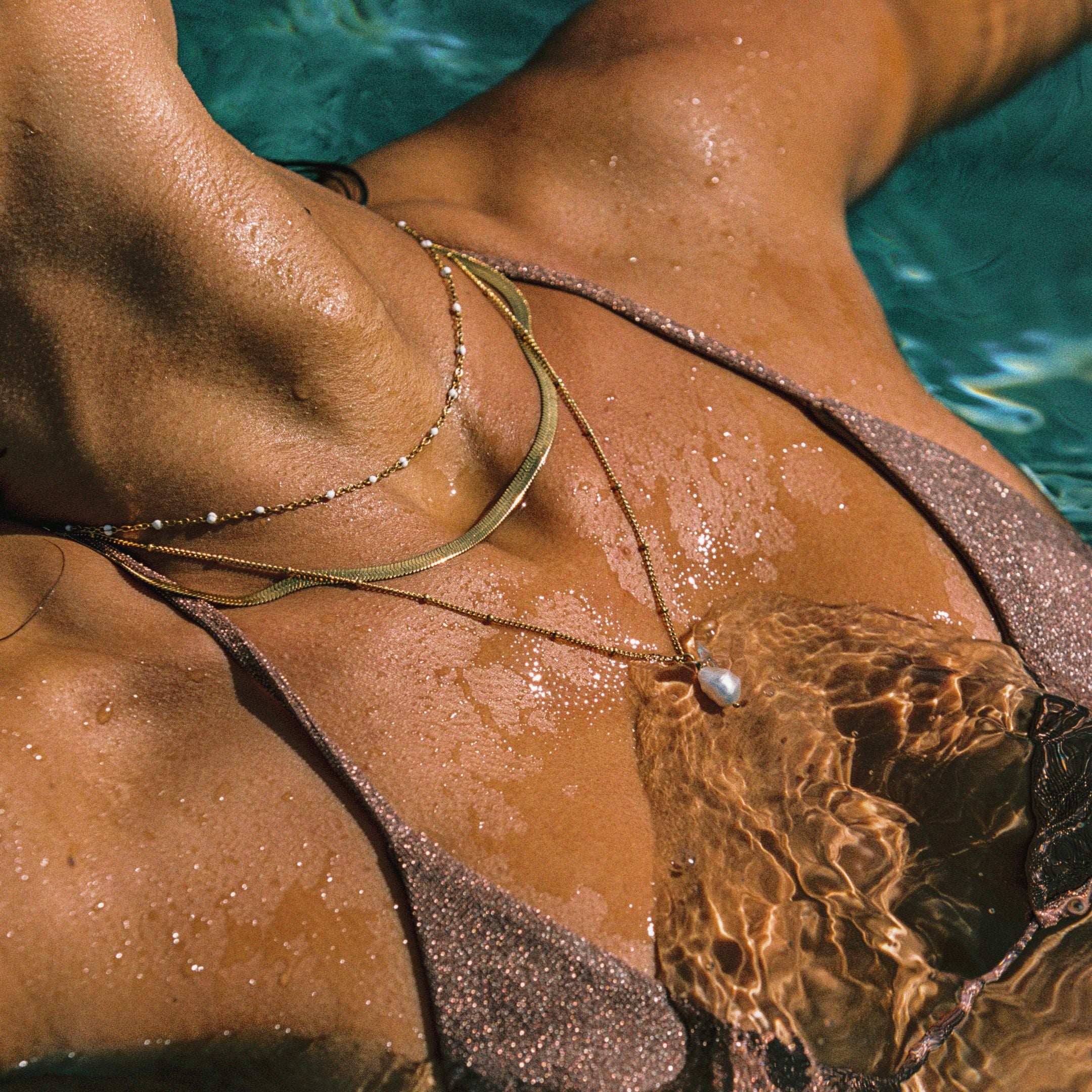
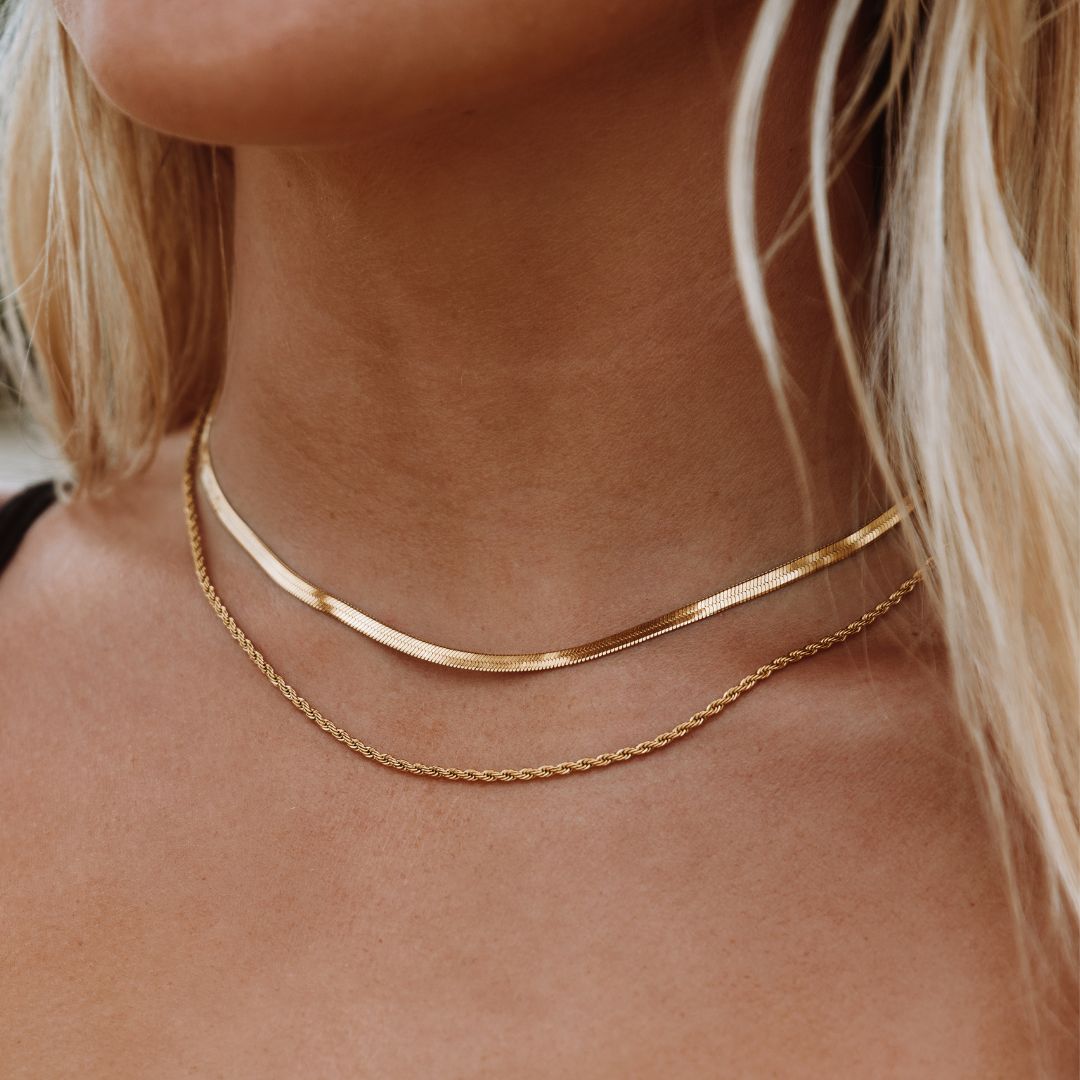
Layering with other necklaces works well for a shell pendant on a fine chain, combined with one or two plain chains at different lengths. Keeping the additional layers simple, without competing pendants, lets the shell remain the visual focus of the combination.
Dressier occasions are generally better suited to metal shell-motif necklaces than natural shell pieces, since the more polished, uniform finish of a metal shell reads as considered jewelry rather than a specifically casual, beach-associated accessory.
Practical Considerations Before Buying
A few practical factors are worth checking before choosing a specific necklace with seashells, since natural shell material and metal construction have different durability profiles.
Natural shell durability is one consideration. Genuine shell material is relatively delicate and can chip or crack if dropped or knocked against a hard surface, more so than metal jewelry. This is worth knowing if you intend to wear the piece actively rather than more occasionally, since natural shells require somewhat more careful handling over time.
Chain and clasp material is a second. For any shell necklace incorporating metal components, chain, clasp, or connecting elements, checking what that metal actually is matters for how well the piece holds up, particularly for anyone planning to wear it through swimming, sweat, and sun exposure regularly. A metal component that tarnishes or corrodes will affect the overall appearance of the piece even if the shell itself remains intact.
Color consistency in natural shells is a third. Natural shell material varies in color and pattern from piece to piece, which is part of its appeal but also means individual pieces will not look perfectly uniform. Metal shell-motif pieces offer more predictable, consistent color and finish if uniformity matters more to you than natural variation.

Keeping a Shell Necklace Looking Its Best
For necklaces incorporating natural shell material, avoid harsh chemical cleaners and prolonged soaking, and wipe the shell gently with a soft, slightly damp cloth after wear involving sweat, sunscreen, or salt water, since these can dull a shell's natural finish over time if left to dry on the surface repeatedly.
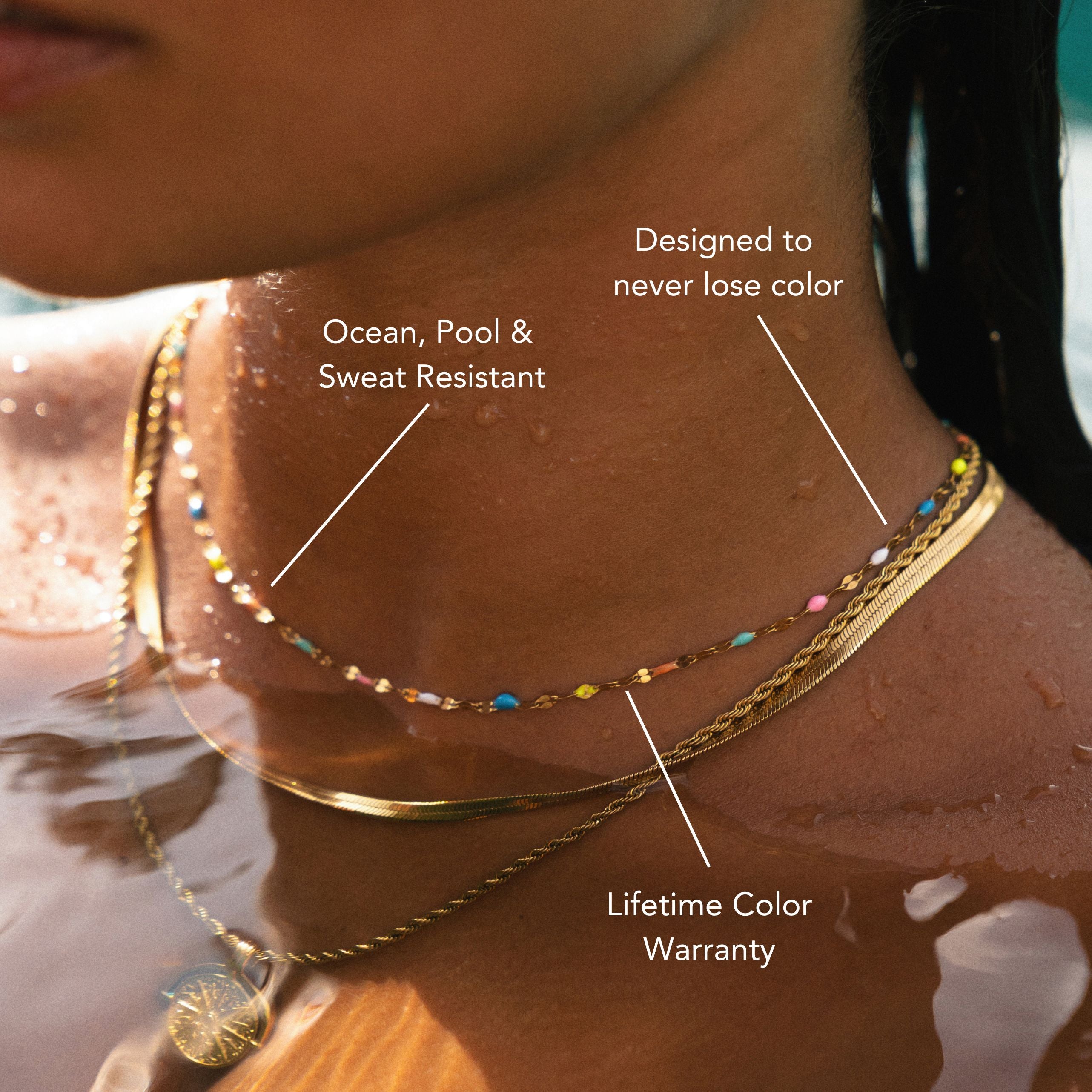
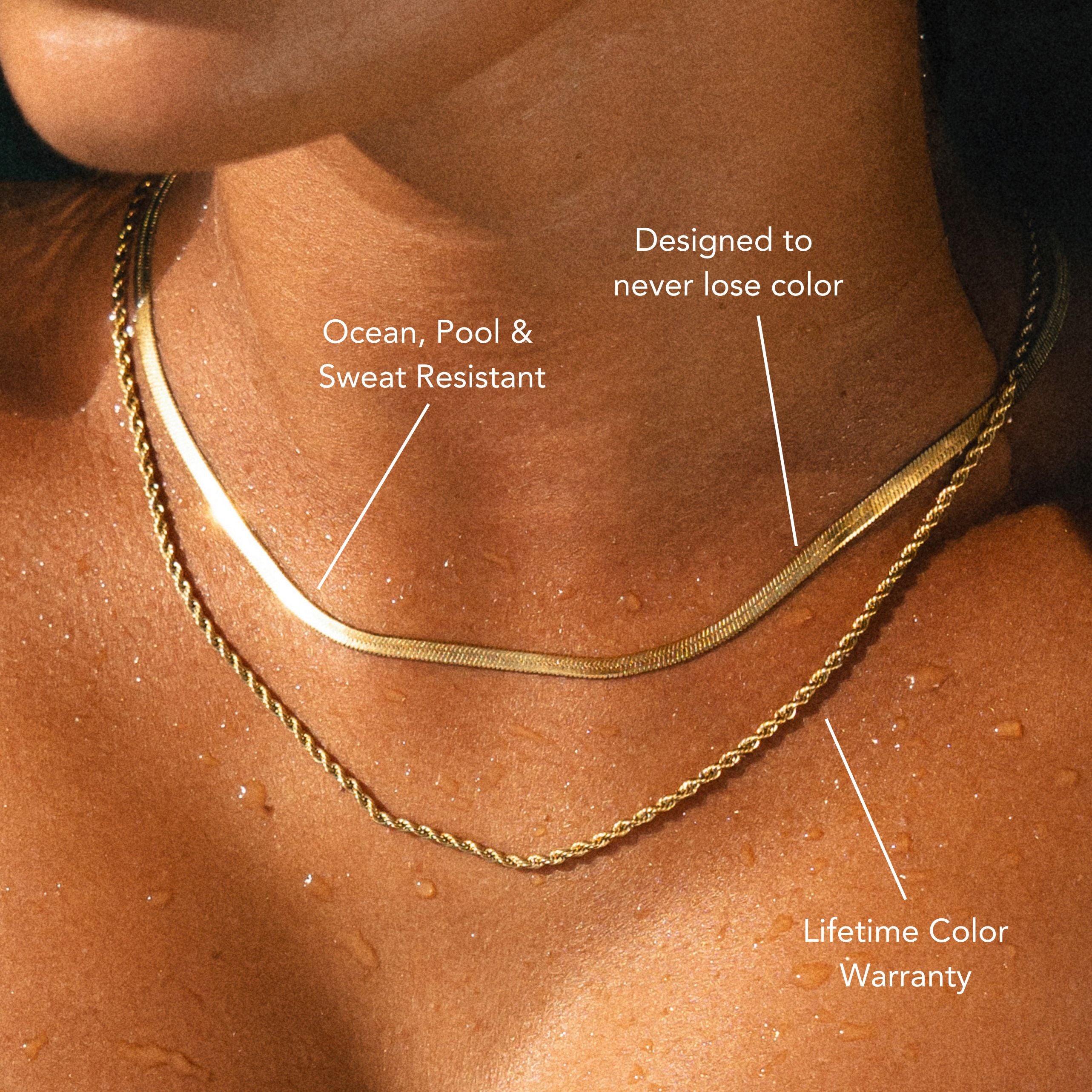
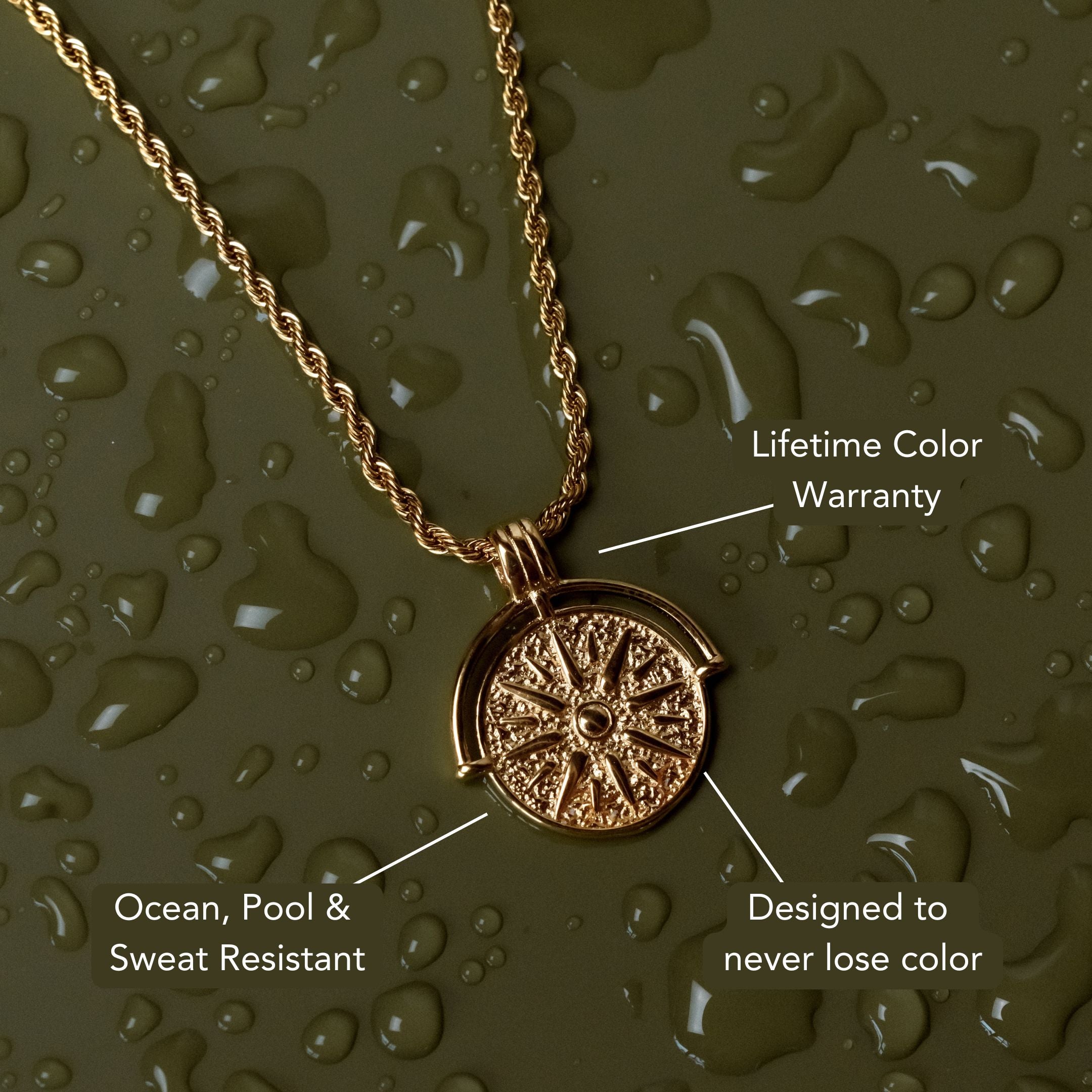
For the metal components of any shell necklace, whether a chain, clasp, or a full metal shell motif, the same considerations that apply to any jewelry metal apply here. A chain or clasp that tarnishes quickly affects the whole necklace's appearance regardless of how well the shell portion is holding up. PVD-coated stainless steel chains and clasps resist the salt water, sun, and sweat exposure that shell necklaces specifically encounter through their most natural styling context, beach and coastal wear, without the tarnishing or corrosion that standard plated or sterling silver components would develop under the same conditions. ATOLEA's summer jewelry range includes shell-inspired necklaces built on that waterproof metal construction, with a lifetime color warranty on the metal elements of every piece.
Frequently Asked Questions
What is the difference between puka shell and cowrie shell necklaces?
Puka shell necklaces use small, naturally occurring shell fragments and beads strung continuously along the necklace, traditionally associated with Hawaii and classic surf and beach culture. Cowrie shell necklaces feature the distinctive rounded, glossy cowrie shell, either as a single pendant or multiple shells along a chain, and carry additional cultural and historical significance beyond puka shell strands.
Can you wear a seashell necklace with any outfit?
A single shell pendant on a fine metal chain is the most versatile style, working with casual everyday outfits as well as beach and resort wear. Cord-based and fragment-strand styles read as more specifically casual and suit beach, resort, and relaxed summer contexts best, rather than dressier or more formal occasions.
Are natural shell necklaces durable enough for everyday wear?
Natural shell material is more delicate than metal and can chip or crack if knocked against a hard surface, so it requires somewhat more careful handling for frequent, active wear compared to a metal shell-motif necklace, which is generally more durable for continuous daily use.
What chain length works best for a shell pendant necklace?
A length of 16 to 20 inches works well for most single shell pendants, sitting at or just below the collarbone where the pendant reads clearly. Puka shell and fragment-strand styles traditionally suit a slightly longer 18 to 22 inch range, which suits the fuller visual weight of a continuous shell strand.
How do you clean a seashell necklace?
Wipe the shell gently with a soft, slightly damp cloth after wear involving sweat, sunscreen, or salt water, avoiding harsh chemical cleaners and prolonged soaking, which can dull the shell's natural finish over time. Clean any metal chain or clasp components using standard jewelry cleaning methods appropriate to that specific metal.
Finding the Right Shell Necklace for You
A necklace with seashells works best when the shell type, chain material, and length are chosen together rather than separately, since each affects how the finished piece looks and performs. Puka shell and cord styles suit the most classic, casual beach aesthetic. A single shell pendant on a fine metal chain offers the most versatility across casual and dressed-up contexts alike. Whichever style you choose, checking the metal components for durability matters as much as the shell itself, particularly for a piece intended to be worn through the beach and water conditions it was designed for in the first place.





コメントを書く
このサイトはhCaptchaによって保護されており、hCaptchaプライバシーポリシーおよび利用規約が適用されます。