


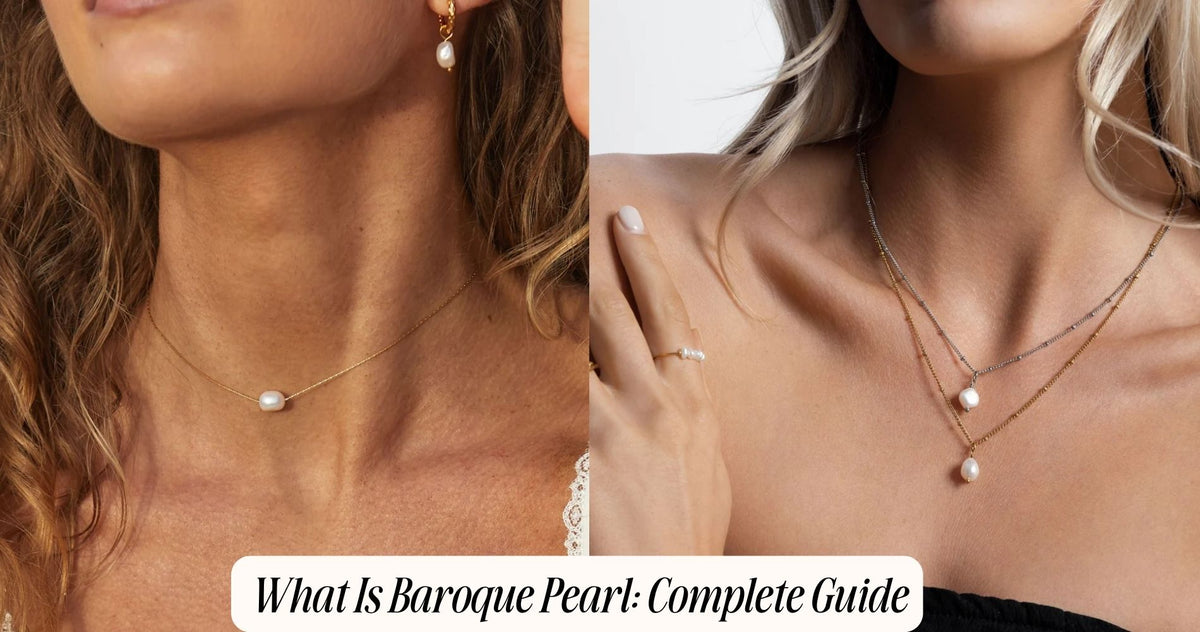
What Is Baroque Pearl: Complete Guide
If you have ever admired a pearl with a wonderfully uneven shape and wondered what is baroque pearl, you have found one of the most characterful gems in jewelry. Unlike the perfectly round pearls of classic strands, baroque pearls are irregular, organic and full of personality. No two are exactly alike, which makes every piece feel one of a kind. You can also browse our Freshwater Pearls Jewelry to see how pearls of many shapes look in modern designs. In this guide, we explain what baroque pearls are, where the name comes from, how to judge quality and how to wear them with confidence.
What Is a Baroque Pearl and What Makes It Different From Round Pearls
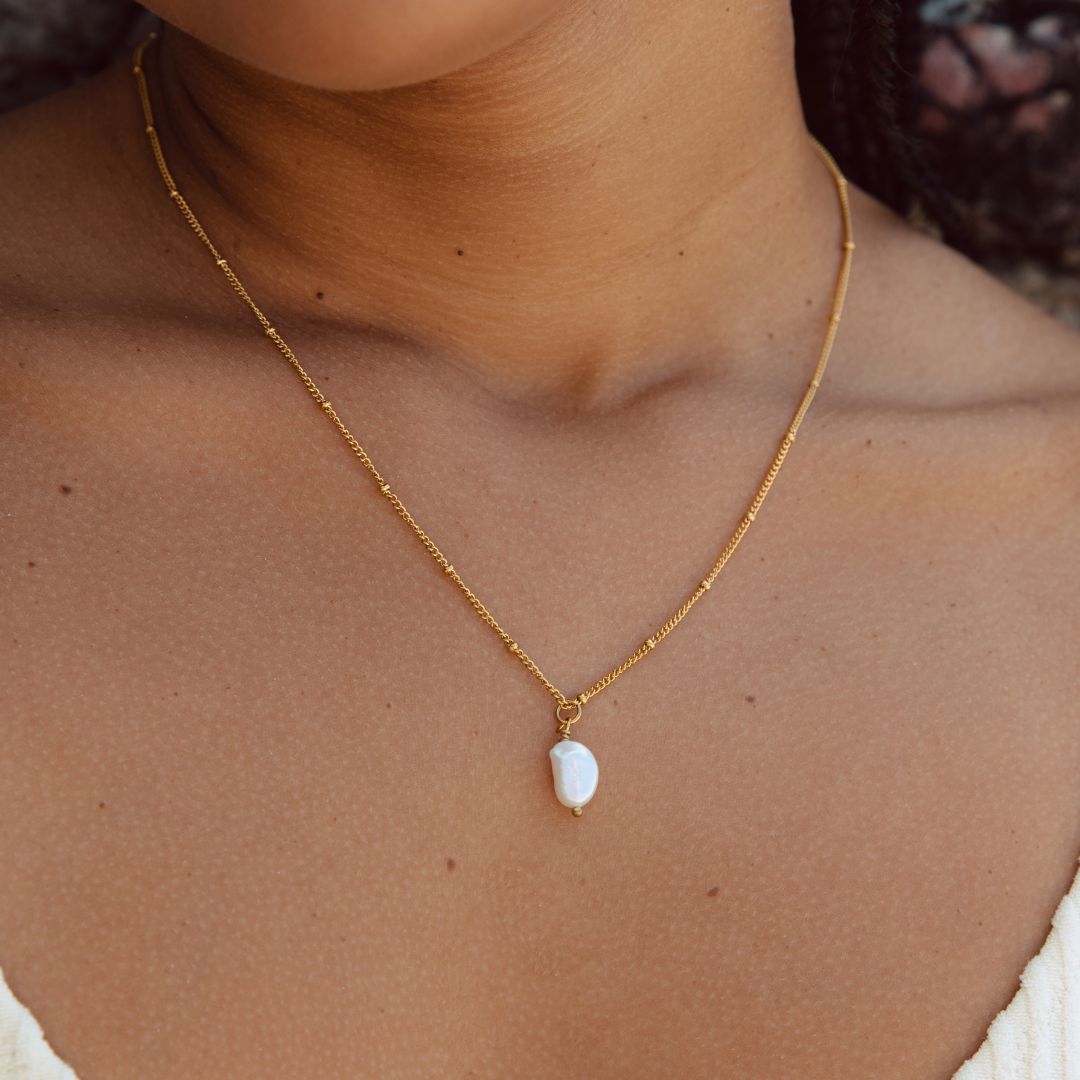
A baroque pearl is any pearl that has an irregular, non-spherical shape. Instead of a perfect round, it may look like a teardrop, a potato, a twisted rod, a coin or a free form nugget. The shape happens naturally as the pearl grows inside the mollusk, and it is not considered a flaw. In fact, many designers and collectors prefer baroque pearls precisely because they look natural and expressive.
Baroque pearls can be natural or cultured, and they can come from freshwater or saltwater mollusks. Today, most baroque pearls on the market are freshwater cultured pearls, which makes them affordable and widely available in many colors.

Where the Name Baroque Comes From
The word baroque is believed to come from the Portuguese word barroco, which was used to describe a rough or irregular pearl. The term later gave its name to the Baroque period in art and architecture, which was known for dramatic, ornate and asymmetrical forms.
That connection is fitting. Just as Baroque art broke away from strict symmetry, baroque pearls break away from the ideal of the perfect sphere. In earlier centuries, jewelers used these unusual pearls to create fantastic pendants shaped like animals, ships and mythical creatures, taking advantage of each pearl's natural contours.
How Baroque Pearls Form Inside the Mollusk
Every pearl begins when an irritant, such as a tiny particle or a piece of tissue, enters the soft body of a mollusk. The mollusk responds by coating the irritant with layers of a substance called nacre. Over time, these layers build into a pearl.
A round pearl forms when the layers build up evenly and the pearl rotates smoothly. A baroque pearl forms when the growth is uneven, when the irritant is an odd shape or when the pearl sits against the shell and cannot turn freely. In cultured pearl farms, many of these irregular pearls appear in the same harvest as round ones, which is part of why they are priced lower.

Types and Shapes of Baroque Pearls You Will See in Jewelry
The shapes within the baroque category are varied, and each gives a different feel.
- Drop and teardrop. Pointed at one end and wider at the other, these shapes are lovely in pendants and dangle earrings.
- Potato or nugget. Rounded but slightly lumpy, these pearls feel casual and earthy.
- Button and coin. Flatter shapes with a smooth face, popular in modern studs and statement necklaces.
- Stick or rice. Long, slim pearls that look sleek and contemporary.
- Keshi. A type of baroque pearl that forms with little or no nucleus, often with a very high luster. The shapes can be wavy and free flowing.
- Cross and twisted. Unusual shapes that can be ideal for one of a kind designs.
The Color Range and Luster of Baroque Pearls
Baroque pearls come in a wide palette. Classic white and cream are always popular, while pink, peach and lavender are common among freshwater pearls. Dyed and naturally dark pearls can appear in gray, bronze, deep blue and black, adding bold contrast to jewelry.
Luster is the glow of light reflecting from the pearl's surface and depths. Strong luster gives a sharp, mirror like shine, while weak luster looks chalky or dull. When you compare pearls, always check the luster first, because it often matters more than the shape.
How to Judge the Quality and Value of a Baroque Pearl
Baroque pearls are generally less expensive than round ones, but quality still varies. These are the main factors to check.
- Luster. High luster and a deep, glowing surface are the signs of a well made pearl.
- Surface quality. Look for smooth skin with few pits, bumps or cracks. Minor marks are normal for baroque pearls, but deep scratches or flaking are not.
- Shape and balance. The shape should look intentional and pleasing. In a strand or earring pair, pearls should feel balanced and harmonious.
- Size. Larger pearls are rarer and usually cost more, as long as the quality is high.
- Color and matching. Evenly matched color in earrings and strands raises the value, and a natural, rich tone is better than a flat, dull one.
- Nacre thickness. Thick nacre means a more durable pearl and a better glow. Very thin nacre may wear away over time.

How to Wear and Style Baroque Pearl Jewelry
One of the best things about baroque pearls is that they feel modern, relaxed and a little unexpected. They bring a quiet artistic touch to any outfit.
- Necklaces. A strand of baroque pearls looks beautiful with a simple white shirt or a knit sweater. A single drop pendant adds a refined touch to a neckline.
- Earrings. Baroque pearl studs and drops are easy to wear every day, and mismatched pairs are especially trendy.
- Bracelets. A pearl bracelet looks pretty on its own, or you can stack it with chains for an elegant mix.
- Rings. A single large pearl in a simple setting makes a confident statement piece.
Baroque pearls also pair well with gold, silver and mixed metals. For a casual look, combine them with jeans and a plain tee, and for evening, layer them with classic pieces for added depth.
How to Care for Baroque Pearl Jewelry
Pearls are organic and softer than most gemstones, so they need gentle treatment. Put them on after you apply perfume, hairspray and makeup, and wipe them with a soft, damp cloth after wearing. Avoid soaking them, and keep them away from harsh chemicals, heat and ultrasonic cleaners.
Store pearls separately in a soft pouch so harder jewelry cannot scratch them. If you own a strand, have it restrung periodically, since the silk thread can stretch with wear. Wearing your pearls often is actually helpful, because natural oils from the skin help keep them from drying out.

Conclusion
So, what is baroque pearl? It is a pearl with an irregular, naturally expressive shape, loved for its individuality, affordability and effortless style. From teardrops to nuggets and keshi, there is a baroque shape to suit every taste. If you check luster, surface and balance, and care for your pearls gently, they will stay beautiful for years. Visit Atolea to find a baroque pearl piece that feels like it was made for you.
FAQs
1. What is baroque pearl?
A baroque pearl is a pearl with an irregular, non-round shape. It may look like a teardrop, a nugget, a stick or a free form design, and it can be natural or cultured.
2. Are baroque pearls real pearls?
Yes. They are genuine pearls formed inside mollusks, just like round pearls. Their shape is simply less regular.
3. Are baroque pearls valuable?
They are usually less expensive than round pearls, but high luster, thick nacre and a pleasing shape can make a baroque pearl quite valuable. Rare natural baroque pearls can be worth even more.
4. What is the difference between baroque and keshi pearls?
Keshi pearls are a type of baroque pearl that forms with little or no nucleus, often with intense luster. Not all baroque pearls are keshi, but many keshi pearls have baroque shapes.
5. Are baroque pearls good for everyday wear?
Yes, if you treat them with care. Choose pearls with thick nacre and a smooth surface, put them on last when you dress, and avoid contact with chemicals and water.
6. How can I tell if a baroque pearl is real?
Real pearls have a slightly gritty feel when rubbed gently against the edge of a tooth, while imitations feel smooth. A jeweler or lab can give a reliable answer.






コメントを書く
このサイトはhCaptchaによって保護されており、hCaptchaプライバシーポリシーおよび利用規約が適用されます。