

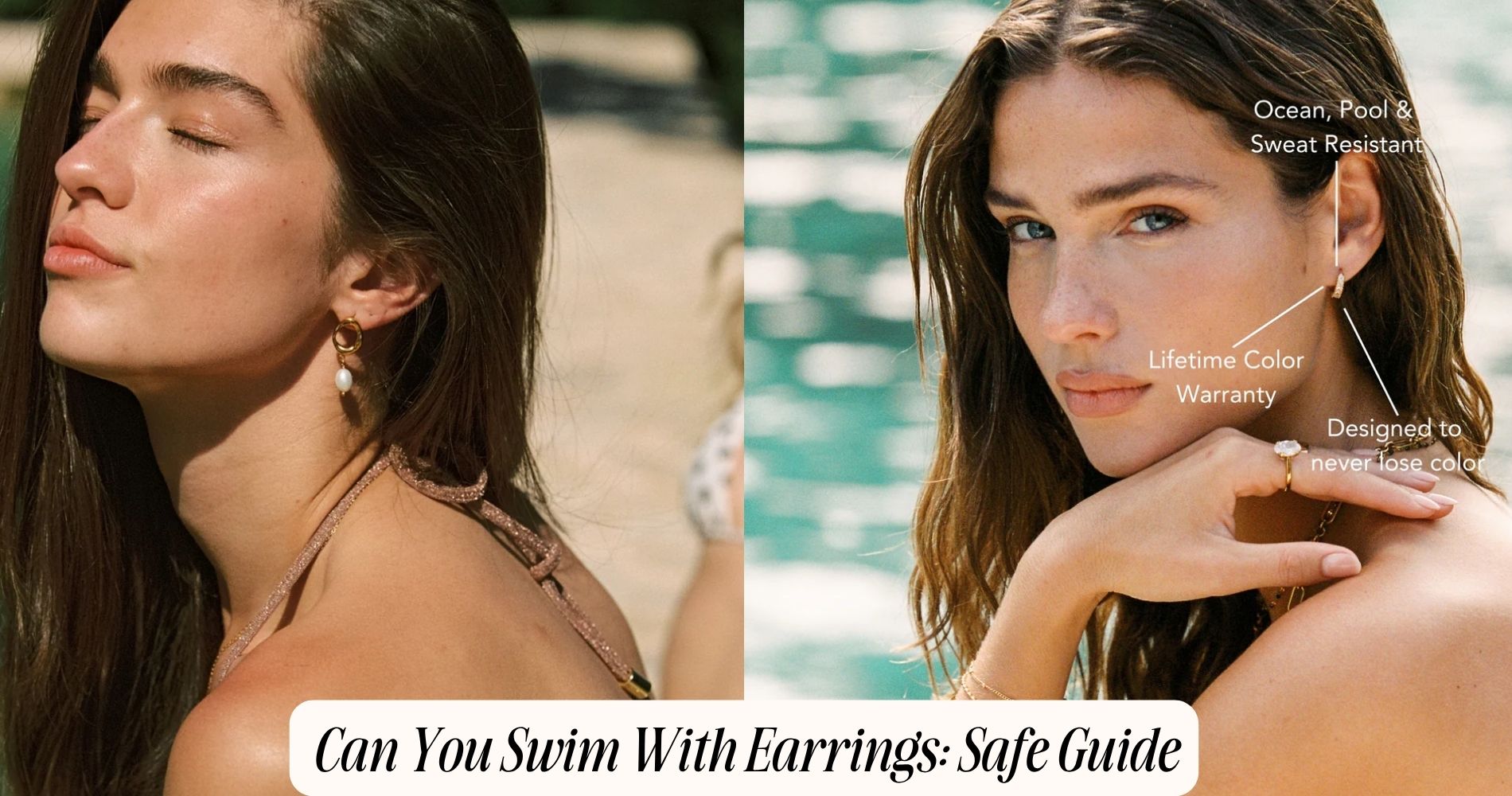
Can You Swim With Earrings: Safe Guide
Whether you are heading to the pool for a training session or spending a day at the beach, the question of what to do with your earrings comes up. Removing them is the default advice, but it is not always the right one. Whether you can swim with earrings depends on two things: the material the earrings are made from and the style of the earring. Get both right and swimming with earrings is not just possible but practical. Waterproof Earrings built for water exposure address both variables from the start. This guide covers what water actually does to earrings, which materials and styles hold up, and what risks exist so you can make an informed decision before getting in.
What Swimming Does to Earrings
Swimming exposes earrings to more demanding conditions than a shower. The specific environment varies by water type, but each creates its own set of challenges for jewelry materials and construction.
Pool water contains chlorine at concentrations typically between 1 and 3 parts per million. Chlorine is a reactive halogen that attacks copper-based alloys aggressively, breaking down the bond between plating layers and their base metal and producing discoloration on reactive surfaces. It also enters micro-gaps in construction, including the join between a post and its setting, and begins its chemical work in those confined spaces where rinsing is difficult.
Ocean water introduces salt, which is corrosive to many metals through an electrochemical process that draws moisture into metal surfaces and accelerates oxidation. Sand abrasion compounds the effect physically, removing thin surface coatings more efficiently than water alone. Ocean conditions also involve pressure changes during diving that push water into construction gaps more forcefully than surface contact.

Fresh water in lakes and rivers carries dissolved minerals, sediment, and biological compounds that are less aggressive than chlorine or salt but still accumulate on earring surfaces over repeated exposure. Public lake swimming also involves a wider range of pH levels than controlled pool or home tap water.
Beyond the water chemistry, the physical demands of swimming create mechanical considerations. The movement of water during lap swimming creates drag on earrings that extends beyond the piercing hole, creating a small but sustained pulling force that cumulates over a session. Diving and flip turns introduce sudden pressure changes. A swim cap worn over earrings concentrates that pressure directly onto the earring closure during fitting and removal.
Can You Swim With Earrings: Materials That Hold Up
The material specification of an earring is the primary determinant of whether it handles swimming conditions without degrading.
PVD-coated stainless steel
PVD-coated 316L stainless steel is the most practical water-resistant earring material at an accessible price. The 316L base resists chlorine and salt water through its chromium oxide passive layer, which does not break down under the chemical conditions of pool or ocean swimming. The PVD finish bonded at the molecular level over the steel base does not lift, peel, or dull through sustained water immersion.
Critically, this construction holds at the post inside the piercing as well as on the outer face. Chlorine that enters the piercing environment around a reactive post causes progressive irritation that builds up over repeated swim sessions before becoming noticeable. A PVD-coated post in a non-reactive base does not trigger that reaction.

Solid gold at 14k and above
Gold does not react with chlorine, salt water, or fresh water under any normal swimming conditions. Solid gold earrings worn through pool and ocean swimming hold their appearance without the plating degradation, discoloration, or piercing irritation that reactive materials produce. The practical limitation is price: solid gold earrings sit at fine jewelry costs that many buyers do not want exposed to the loss risk that active water use involves.
Titanium
Titanium's passive oxide layer holds through chlorinated and salt water without any degradation. It is fully nickel-free, which eliminates the piercing irritation that nickel-containing metals can produce when water amplifies skin contact. For swimmers with sensitive piercings or known metal sensitivity, titanium is the most reliably problem-free option.
Surgical-grade stainless steel (316L, uncoated)
Uncoated 316L steel handles pool and ocean swimming without corroding or discoloring. The natural steel finish is a cool silver-gray and does not tarnish through water exposure. For color finishes, PVD coating over the same base metal adds durability without compromising the water resistance of the underlying steel.
Materials That Should Not Go Swimming
| Material | Pool Risk | Ocean Risk | Primary Damage Mechanism |
|---|---|---|---|
| Gold-plated brass | High | Very high | Chlorine and salt attack copper base beneath plating |
| Sterling silver | High | Very high | Sulfur and salt accelerate tarnishing severely |
| Brass or bronze | Very high | Very high | Direct copper corrosion from chlorine and salt |
| Rhodium-plated silver | Moderate | High | Rhodium layer wears through, silver beneath tarnishes |
| Gold-filled | Moderate | Moderate | Brass core exposed at joins with repeated swim wear |
Gold-plated brass earrings are the most common problem case for swimmers because they are the most widely owned fashion earring material. The gold layer on a plated earring provides no protection against chlorine at the join between the post and setting, which is exactly where water pressure during swimming forces pool water into contact with the base metal. Once the brass underneath reacts with chlorine, the discoloration and finish degradation at that join spreads outward and is not reversible through cleaning.
Sterling silver is particularly vulnerable in ocean conditions because salt water combines with the sulfur compounds already present in the marine environment to produce very rapid tarnishing. A sterling silver earring worn through an ocean swim session will show significant tarnishing within hours rather than the weeks of gradual air tarnishing that careful storage produces.

Earring Styles That Work Best for Swimming
Material handles the chemical and corrosion question. Style handles the mechanical and security question. For swimming, the two practical requirements are secure closure and low profile.
Flat back labret studs are the most secure earring style for swimming. The threaded or threadless flat back sits flush against the lobe and does not loosen through water movement or pressure. During flip turns, diving, and lap swimming, a flat back stud stays in place without the back mechanism working loose. The face size range of 4mm to 8mm creates minimal water resistance during movement.
Huggie hoops at 10mm to 14mm inner diameter sit close enough to the lobe that they do not create significant drag during movement and their hinged click closure locks more securely than open hoop wire-and-catch mechanisms. For swimmers who prefer a hoop over a stud, huggies are the practical choice because their close fit does not catch on swim caps or create the pendulum movement that larger hoops produce during swimming.
Small hoops at 15mm to 20mm work for casual open water swimming and beach days but are less practical for lap swimming in a pool. Their slight pendulum movement during freestyle and backstroke becomes noticeable over a full session and the closure is more likely to work open under sustained directional water pressure than a flat back or huggie closure.
Drop and dangle styles should not be worn for swimming. The open construction retains water and produces drag during movement. Their closures are the least secure under water pressure and the pendulum movement during swimming creates sustained friction on the piercing that accumulates over a session.

Risks to Know Before Swimming With Earrings
Even with the right materials and styles, a few specific risks are worth understanding before making the decision to swim with earrings regularly.
Loss risk is the most immediate practical concern. Even secure closures have a small failure rate in water. Flat backs and huggies are significantly more reliable than butterfly backs or open hook wires, but no earring closure is zero-risk in a pool or ocean environment. For earrings with personal or financial significance, the replacement cost is worth factoring against the convenience of not removing them.
Healing piercing risk is a more serious consideration. Professional piercers consistently recommend keeping new piercings out of pool and ocean water during the healing period, which typically runs three to six months for lobe piercings and longer for cartilage. Pool chlorine and ocean bacteria both introduce infection risk into a piercing that has not yet completed healing. For healed piercings in good condition, this risk is minimal with appropriate materials.
Swim cap pressure on larger earrings can stress both the closure and the piercing during fitting and removal. Flat back studs under a cap create essentially no pressure point. Larger hoops under a cap bend inward and push through the lobe in a way that is uncomfortable and potentially damaging to the closure mechanism over time.
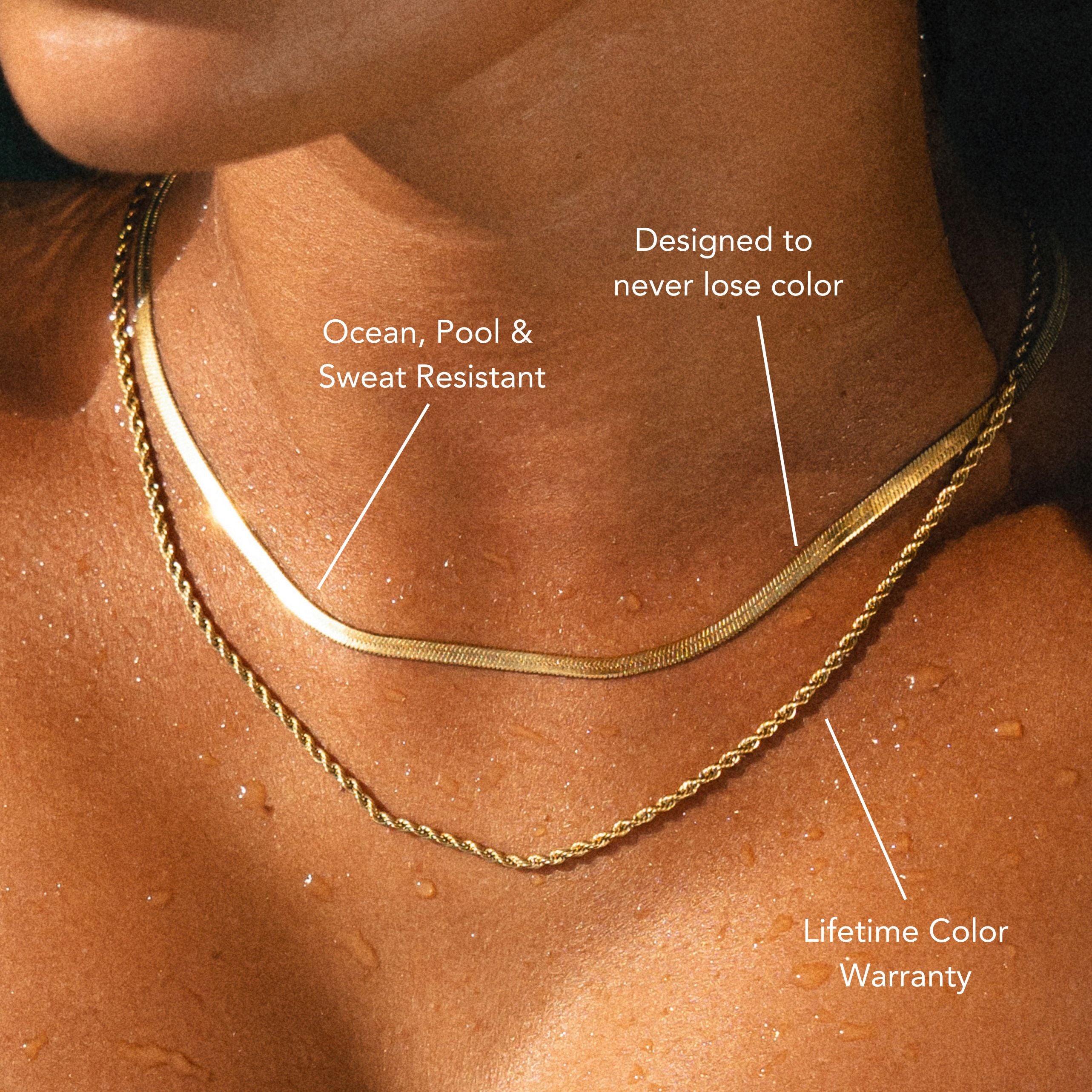
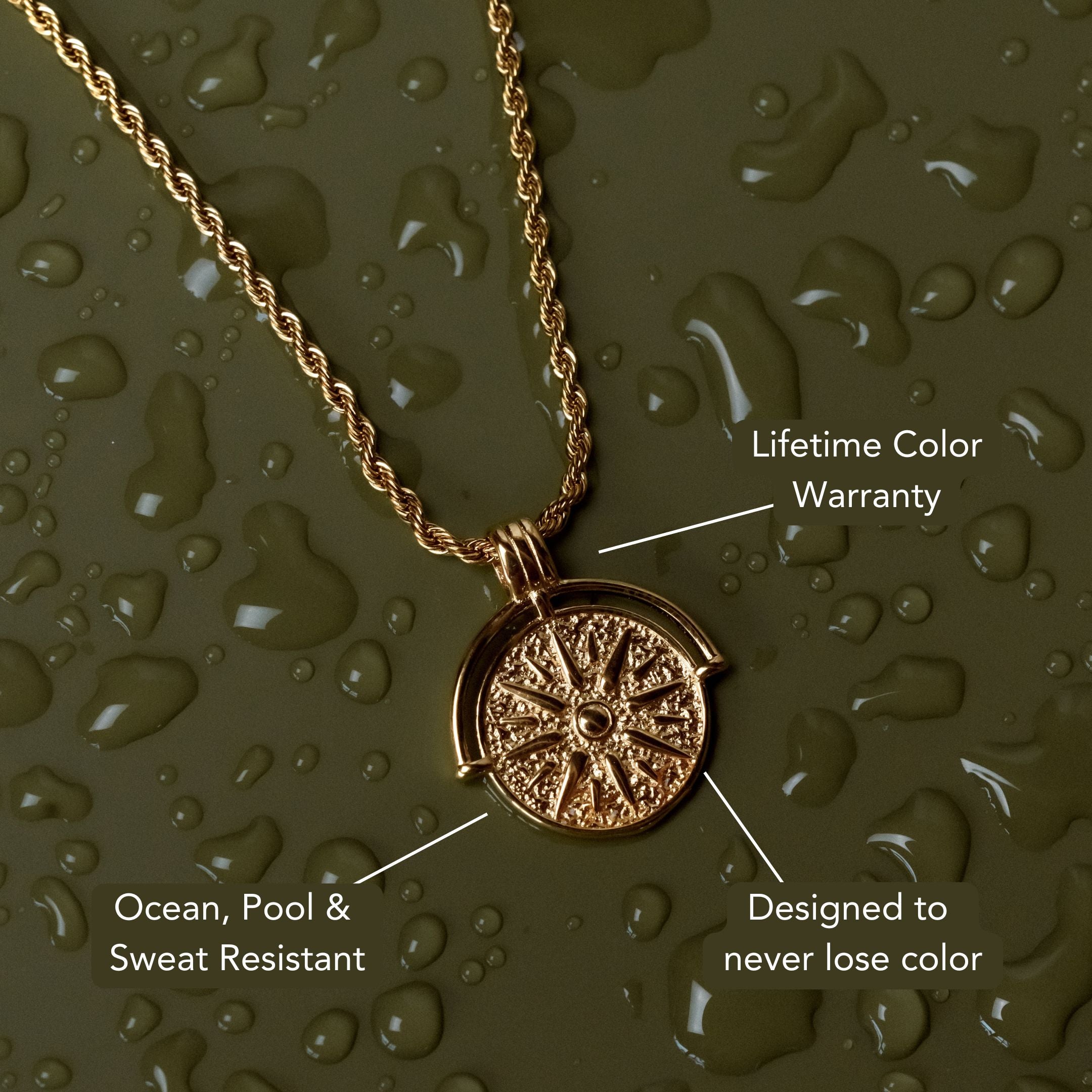
For regular swimmers who want earrings that genuinely hold up through training sessions, beach days, and ocean swims without any of those concerns, ATOLEA's waterproof earring range covers flat back studs and huggie hoops in PVD-coated stainless steel with a lifetime color warranty. The hypoallergenic construction means the post material stays clean through the piercing environment regardless of chlorine or salt exposure.

Frequently Asked Questions
Is it safe to swim with earrings in?
Yes, with the right material and style. PVD-coated stainless steel, solid gold at 14k and above, and titanium earrings are safe for pool and ocean swimming in terms of material degradation and piercing safety. Flat back studs and huggie hoops provide the most reliable closure security for active swimming. Gold-plated, sterling silver, and brass earrings should not be worn for swimming because the water exposure damages the material and can cause piercing irritation.
Can you swim in a pool with earrings?
Yes, if the earrings are made from a chlorine-resistant material. PVD-coated stainless steel, solid gold, and titanium all resist chlorine without degrading. Standard fashion earrings with brass or copper bases should not go in a pool because chlorine attacks those base metals aggressively once the plating wears through at joins and post points.
Do earrings rust in water?
Earrings made from iron-based metals without corrosion protection can rust in water. However, 316L surgical-grade stainless steel and titanium form passive protective layers that prevent rusting under normal swimming conditions. Gold does not rust. Standard fashion earrings with unprotected metal bases or worn-through plating can show rust or corrosion with repeated water exposure.
Can you swim in the ocean with gold earrings?
Solid gold earrings at 14k and above handle ocean swimming without tarnishing, corroding, or losing their appearance. Gold-plated earrings should not be worn in the ocean because salt water accelerates the degradation of the plating layer and causes rapid tarnishing of the copper or brass base once the plating lifts. The distinction between solid gold and gold-plated is the critical factor for ocean wear.
Should you take earrings out to swim?
Only if the earrings are made from materials not suited for water exposure: gold-plated brass, sterling silver, or other reactive metals. For earrings made from PVD-coated stainless steel, solid gold, or titanium, there is no material reason to remove them before swimming. The practical decision factors are loss risk and, for healing piercings, the infection risk from pool and ocean water during the healing period.
Swimming and Earrings: Making the Right Call
Can you swim with earrings is a material and style question before it is a safety question. PVD-coated stainless steel, solid gold, and titanium handle chlorine, salt water, and sustained immersion without damaging the earring or irritating the piercing. Flat back studs and huggie hoops provide the security that active swimming requires. With those two variables addressed, removing earrings before every pool session or beach day becomes a habit based on preference rather than necessity.






Leave a comment
This site is protected by hCaptcha and the hCaptcha Privacy Policy and Terms of Service apply.