

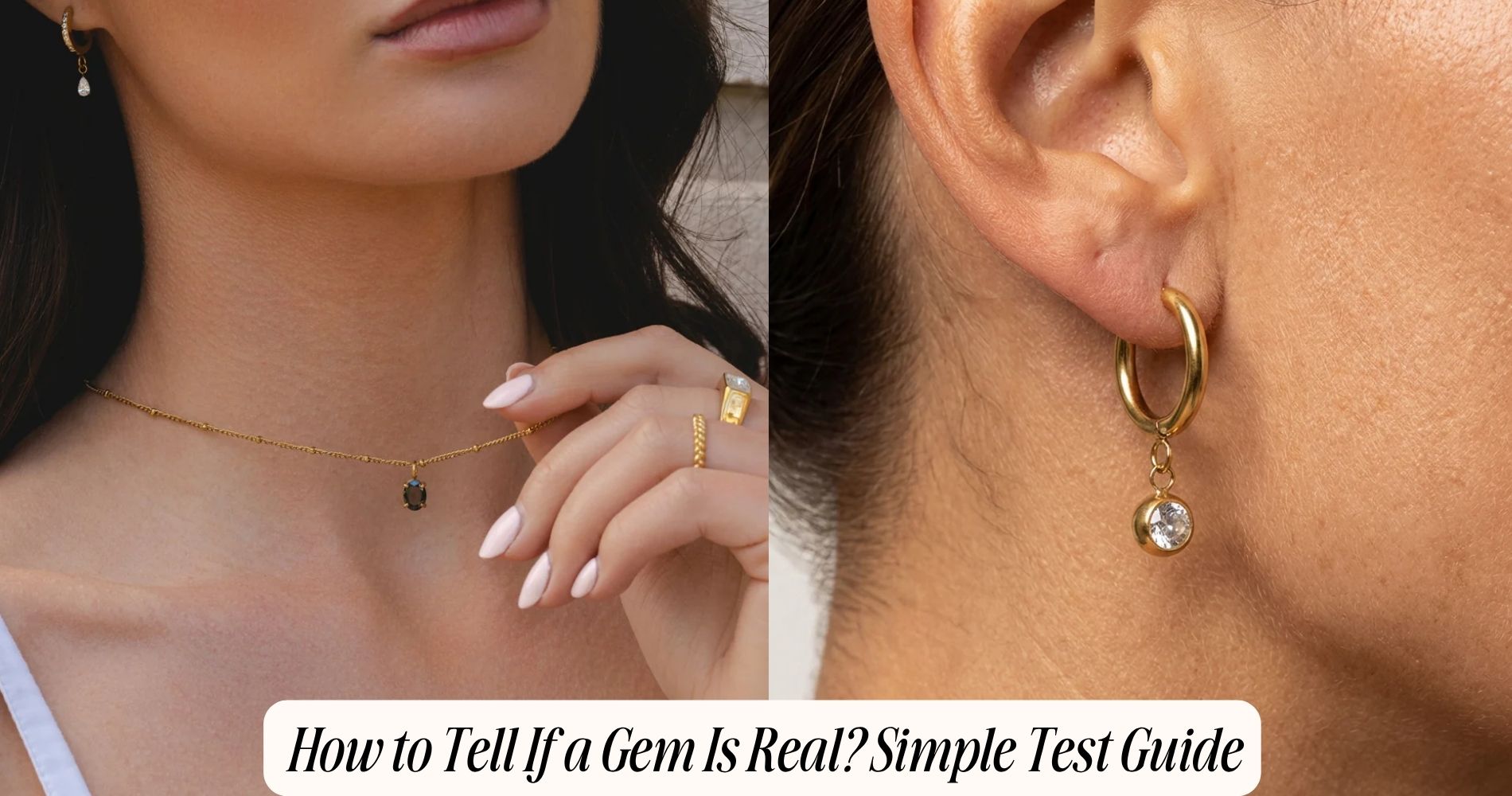
How to Tell If a Gem Is Real? Simple Test Guide
How to tell if a gem is real? To screen if a gem’s real, inspect it under neutral daylight for consistent hue, saturation, and natural inclusions, not suspicious perfection. Use a steel needle for a basic hardness check and a precision scale to compare weight with known density values. Evaluate temperature (real stones feel cool), and observe light refraction and facet sharpness in and out of water. For uncertain or high-value stones, explore our Stone Collection for professionally selected pieces that meet strict quality standards.
Quick At-Home Checks to Spot Real Gems
Before you invest in professional testing, you can perform several simple, low-cost observations at home that quickly flag obvious fakes. Start with a controlled visual inspection under strong, neutral lighting.
Check for surface scratches that suggest glass or plastic rather than crystalline lattice durability. Use a basic hardness test (such as trying to scratch the stone with a steel needle) to compare against known Mohs values.
Observe light reflection: real gems often show sharp, high-contrast reflections consistent with their refractive index.
With a loupe, you might see gemstone inclusions, which can support gem authenticity when they look natural, not like uniform bubbles.
Finally, note certification importance; uncertified stones warrant extra skepticism and more rigorous follow-up testing.

Check Color, Clarity, and Natural Flaws
Although you can’t assign lab-grade values at home, you should still evaluate a stone’s color, clarity, and inclusions as a gemologist would. Use neutral daylight and a 10x loupe.
First, assess hue, tone, and saturation. Natural stones rarely show perfectly uniform color; subtle zoning or pleochroism often supports authentic gemstone identification.
Next, inspect clarity. Note transparency and any cloudiness or surface-reaching fractures. Genuine gemstone characteristics include tiny inclusions: crystals, needles, feathers, or growth tubes aligned with the stone’s crystal structure.
Watch for suspicious perfection. Completely flawless, glassy interiors in inexpensive “gems” often indicate glass or synthetic material.
Finally, compare what you see to reference images for that species; each gem type has typical inclusion patterns and color behaviors.
Test Weight and Temperature for Real vs Fake Gems
While visual inspection reveals a lot, you should also treat weight and temperature as quick, low-tech diagnostic tools for separating real gems from imitations.
Start with weight comparison: place the loose stone on a precision scale and compare its mass with a known authentic gem of identical dimensions, or consult standard density tables. Genuine corundum, diamond, and beryl typically feel disproportionately “heavy” for their size, while glass and many plastics feel deceptively light.
Next, assess temperature sensitivity. Real crystalline materials usually feel cool to the touch and require longer to equilibrate to body temperature because of higher thermal conductivity.
Plastics and resins warm almost instantly in your hand. Repeat both tests several times to account for handling variables and ambient conditions.

Use Light and Water Tests to Spot Fake Stones
Because gemstones interact with light and liquids in characteristic ways, you can exploit simple light and water tests to distinguish authentic stones from common simulants. Under a strong, focused beam, rotate the stone and observe light refraction and dispersion.
Genuine gems often exhibit sharp spectral separation, distinct brilliance, and well‑defined internal reflections, while glass or plastic looks hazy or overly uniform.
Next, perform a controlled water test. Fill a clear vessel and gently place the stone on the water surface, then fully submerge it.
Note apparent brightness, outline sharpness, and visibility of facet junctions. Higher‑density, higher‑refractive‑index gems typically appear darker, with crisp facet edges, whereas many imitations seem washed out, with blurred boundaries and inconsistent optical behavior.
Know When to Stop and Call a Gem Expert
Light and water tests give you preliminary data, but there’s a point where home methods stop yielding reliable distinctions and you risk misidentifying a stone.
When you’re dealing with high-value material, unusual color zoning, or inclusions that don’t match online examples, pause your DIY gem identification methods.
If you can’t confidently distinguish natural, synthetic, and treated stones, consult a credentialed gemologist. They’ll use refractometers, polariscopes, spectroscopes, and microscopic analysis to determine species, variety, and treatment status.
Ask for a written report, not just verbal feedback.
Leverage professional appraisal tips: verify the expert’s credentials, request standardized grading terminology, and confirm they operate an insured, independent lab.
When in doubt, treat uncertainty as a signal to seek expert verification.

Frequently Asked Questions
Can a Smartphone App Accurately Identify if My Gemstone Is Real?
They can’t reliably do it. Gem identification apps using smartphone technology estimate species via spectral patterns and colorimetry, but lack refractometer data, specific gravity measurements, and microscopic inclusion analysis, so you shouldn’t use them for definitive authenticity verification.
How Do Lab-Grown Gems Compare in Value to Natural Gems?
You’ll find lab-grown gems usually exhibit lower market valuation than natural counterparts; lab grown differences stem from abundant supply, disclosed synthetic origin, and reduced rarity, so in value comparison, collectors and investors still prioritize untreated, geologically formed specimens.
Are Online Gem Certification Services Trustworthy and Recognized by Jewelers?
They’re partially trustworthy: you must verify certification credibility by confirming the lab’s accreditation (e.g., GIA, AGS, IGI) and report standards. Jewelers prioritize jeweler recognition, favoring established gemological laboratories over generic or automated online certification platforms.
What Insurance Should I Get for Valuable Gemstones or Jewelry Pieces?
You should obtain a scheduled personal articles policy. You’ll first secure a lab-grade gemstone appraisal and jewelry valuation, then insure each item individually for agreed value, covering mysterious disappearance, damage, and worldwide all-risk, replacement-cost protection.
How Can I Safely Clean Real Gemstones Without Damaging Them?
You safely clean real gemstones using controlled gemstone cleaning methods: lukewarm distilled water, neutral-pH detergent, and gentle agitation. Employ safe cleaning tools—soft-bristle brush, lint-free cloth—avoiding ultrasonics or steam for fracture-filled, oiled, or heat-sensitive stones like opal or emerald.
Conclusion
By now, you can run basic field tests—visual inspection for inclusions, refractive behavior under light, density cues from heft, and thermal conductivity checks—to screen obvious simulants. These at‑home diagnostics don’t replace professional gemological analysis with refractometers, spectroscopes, or advanced microscopy, but they help you flag suspect stones fast. When results conflict or the specimen’s valuable, stop experimenting and take it to a certified gemologist for a definitive identification and grading.









Leave a comment
This site is protected by hCaptcha and the hCaptcha Privacy Policy and Terms of Service apply.