

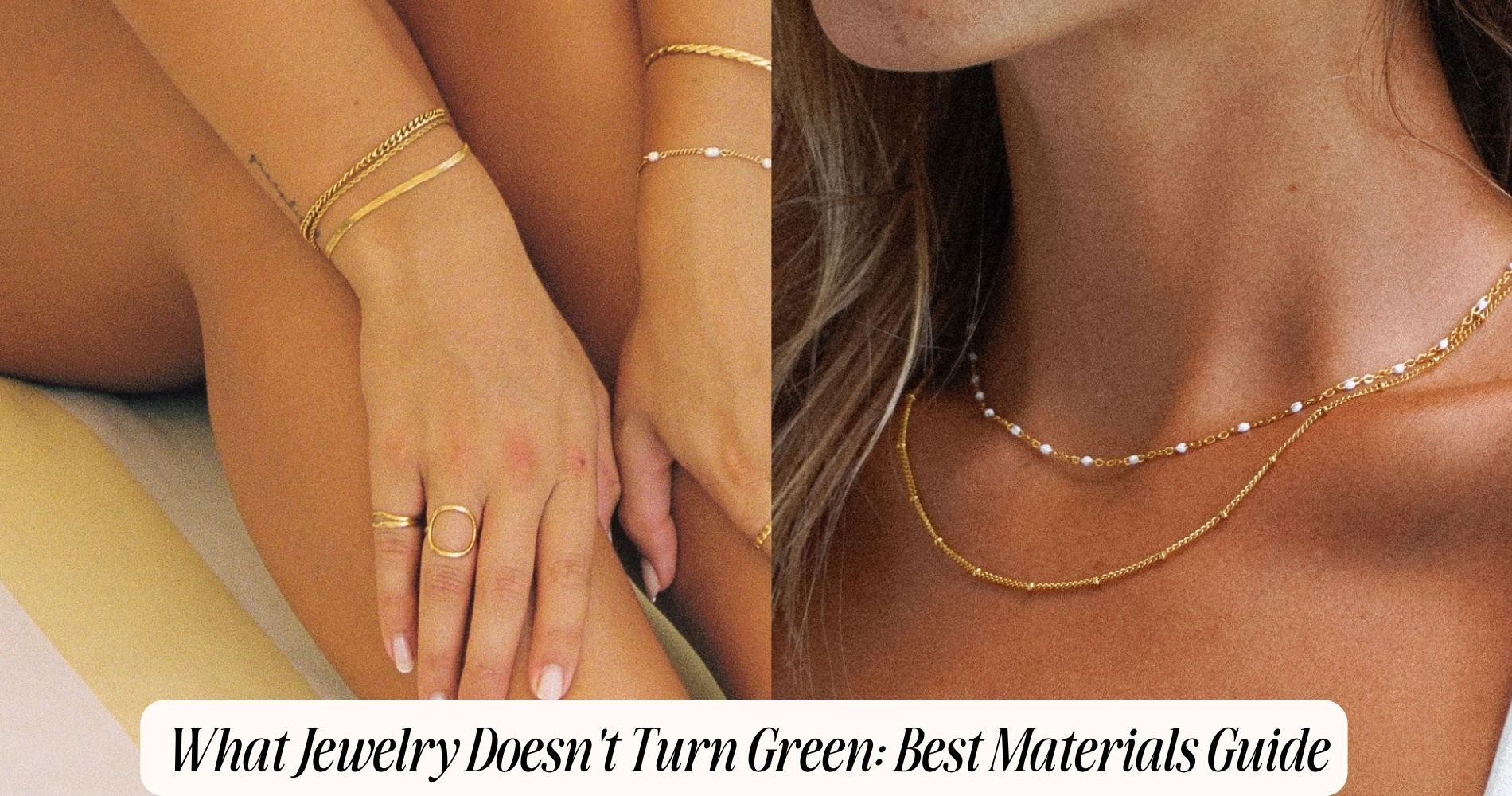
What Jewelry Doesn't Turn Green: Best Materials Guide
The green ring around your finger or the green mark on your wrist is not a sign of dirty skin or low-quality jewelry in a general sense. It is a specific chemical reaction between the metal in your jewelry and your skin's chemistry. Knowing what jewelry doesn't turn green requires understanding which metals cause that reaction and which ones are chemically stable enough to avoid it entirely. Tarnish-free Jewelry built on non-reactive metals eliminates the problem at the source rather than managing it. This guide explains the chemistry behind green skin, identifies every material that causes it and every material that does not, and gives you a clear framework for buying jewelry that stays clean against your skin.
Why Jewelry Turns Skin Green
The green color is copper carbonate or copper chloride, compounds that form when copper reacts with the carbon dioxide, moisture, and chloride ions present on skin. Copper is the key variable. It is highly reactive with skin chemistry, particularly with the combination of sweat, natural skin acids, and the residue from skincare products and soap.
Most fashion jewelry uses copper or brass (a copper-zinc alloy) as its base metal because both are inexpensive, easy to cast and shape, and carry plated finishes well. The plating gives the piece its gold or silver appearance, but underneath it the reactive copper base is still present. When the plating wears away through friction, sweat, or water exposure, that copper base comes into direct contact with skin. The reaction begins quickly and the green compound transfers to your skin and sometimes to clothing.

The rate at which this happens depends on plating thickness, the acidity of your skin chemistry, and how much water and sweat the jewelry encounters. People with more acidic skin or who sweat heavily tend to experience green discoloration faster than others from the same piece. This is why two people can wear identical jewelry and one turns green within days while the other takes weeks.
Copper content is the common thread behind every case of green skin from jewelry. Materials that contain no exposed reactive copper at the skin contact surface do not produce the reaction.
What Jewelry Doesn't Turn Green: Materials That Keep Skin Clean
PVD-coated stainless steel
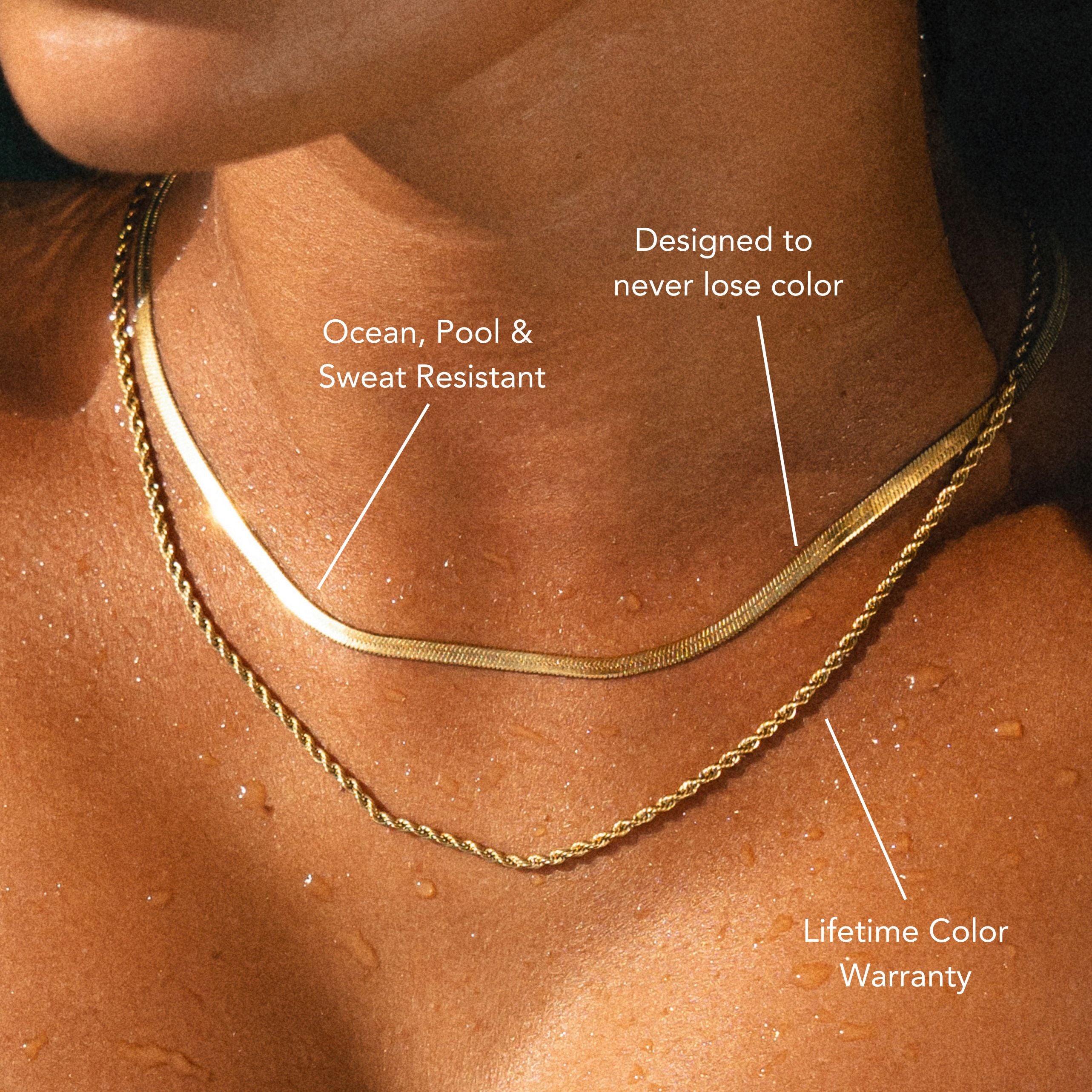
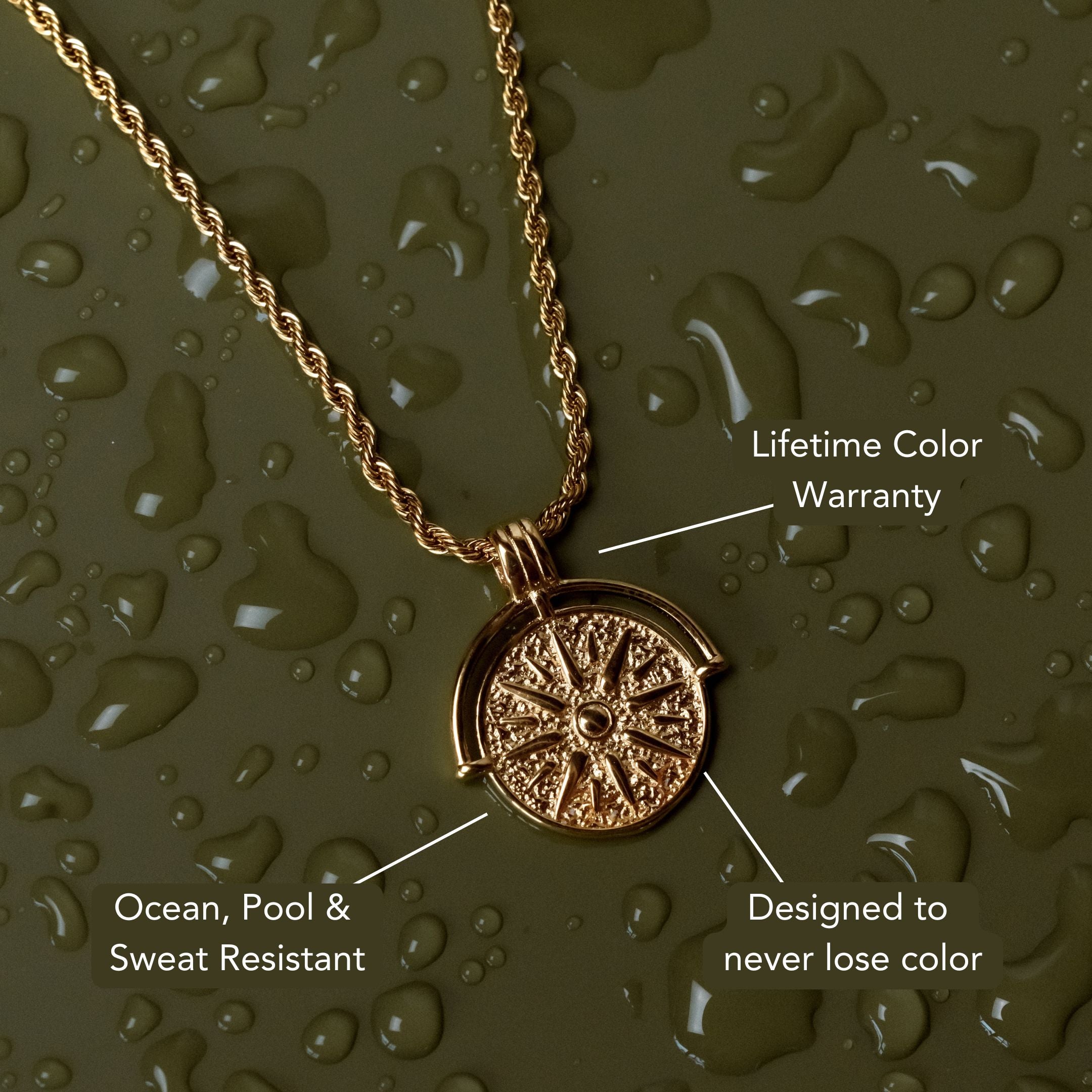
PVD-coated 316L stainless steel contains no copper at its surface and does not produce green discoloration under any wearing condition. The stainless steel base metal is an iron-chromium alloy with no copper content. The PVD finish bonded over it at the molecular level adds a color layer that holds through sweat, water, and sustained skin contact without degrading to expose a reactive base.
The 10-times-thicker bond of PVD coating versus standard electroplating is what distinguishes it from plated pieces that also appear copper-free at purchase but expose their copper base within weeks of daily wear. A PVD-coated piece worn through beach days, gym sessions, and daily showers maintains that clean skin contact through the full life of the piece.

Solid gold at 14k and above
Gold does not react with skin chemistry to produce copper carbonate or any other discoloring compound. At 14k, the alloy is 58.5% gold, which is high enough that the piece behaves as a non-reactive material against skin. The remaining alloy content in 14k gold typically includes silver, zinc, and some copper, but the gold matrix encapsulates those metals sufficiently that copper ion release does not occur at levels that cause green discoloration under normal wearing conditions.
At 10k gold (41.7% gold), the higher proportion of alloy metals means a small number of people with highly acidic skin chemistry may occasionally experience very mild discoloration. At 14k and above, this is not a practical concern.
Platinum
Platinum is completely non-reactive against skin chemistry and does not contain copper in any meaningful proportion. It does not tarnish, does not discolor skin, and maintains clean contact with skin indefinitely. Its limitation is price, placing it firmly in fine jewelry territory.
Titanium
Titanium produces no green discoloration because it contains no copper and its passive oxide surface layer prevents any reactive ion release. It is one of the most biocompatible metals available, which is why it is used in surgical implants that remain inside the body permanently. For jewelry wearers with extremely reactive skin chemistry who turn green quickly from even moderately reactive metals, titanium is the most reliable option.
Surgical-grade stainless steel (316L, uncoated)
316L stainless steel does not cause green skin discoloration. Its base composition is iron, chromium, nickel, and molybdenum with no copper. The chromium oxide passive layer prevents ion release that could stain skin. A small proportion of people with severe nickel sensitivity may experience redness or irritation from 316L steel (due to its nickel content), but this is a separate reaction from the green copper discoloration that most people experience with fashion jewelry.
Materials That Do Cause Green Skin
| Material | Green Skin Risk | Cause | Typical Onset With Daily Wear |
|---|---|---|---|
| Brass | Very high | High copper content, direct skin reaction | Days to weeks |
| Copper | Very high | Pure copper reacts immediately with skin acids | Days |
| Bronze | High | Copper-tin alloy, similar reaction to brass | Weeks |
| Gold-plated brass | High | Plating wears through to copper base | 1 to 6 months |
| Gold-filled | Moderate | Brass core exposed at wear points over time | 6 months to 2 years |
| Sterling silver | Low to moderate | Minor copper content, occasional mild reaction | Months, not consistent |
| White gold (low karat) | Low | Some alloy copper content at lower karats | Inconsistent |

How to Identify Green-Risk Jewelry Before Buying
Three checks at the point of purchase reduce the chance of buying a piece that turns your skin green.
Find the base metal name. The base metal is the material the piece is fundamentally constructed from, underneath any finish or plating. A product description that names only the finish (gold tone, silver plated, 18k gold plated) without specifying the base metal almost always means brass or an unspecified copper alloy underneath. A description that names 316L stainless steel, solid gold at a specific karat, titanium, or platinum as the base metal gives you verifiable information about skin safety.
Evaluate the coating method. For non-solid-precious-metal jewelry, the coating method determines how long the finish protects the base metal from skin contact. Electroplated finishes are thin and wear through. PVD coating applied at the molecular level is approximately 10 times thicker and does not degrade at friction points the way electroplating does. A piece with a PVD finish over a non-copper base metal is genuinely unlikely to cause green skin through normal daily wear.
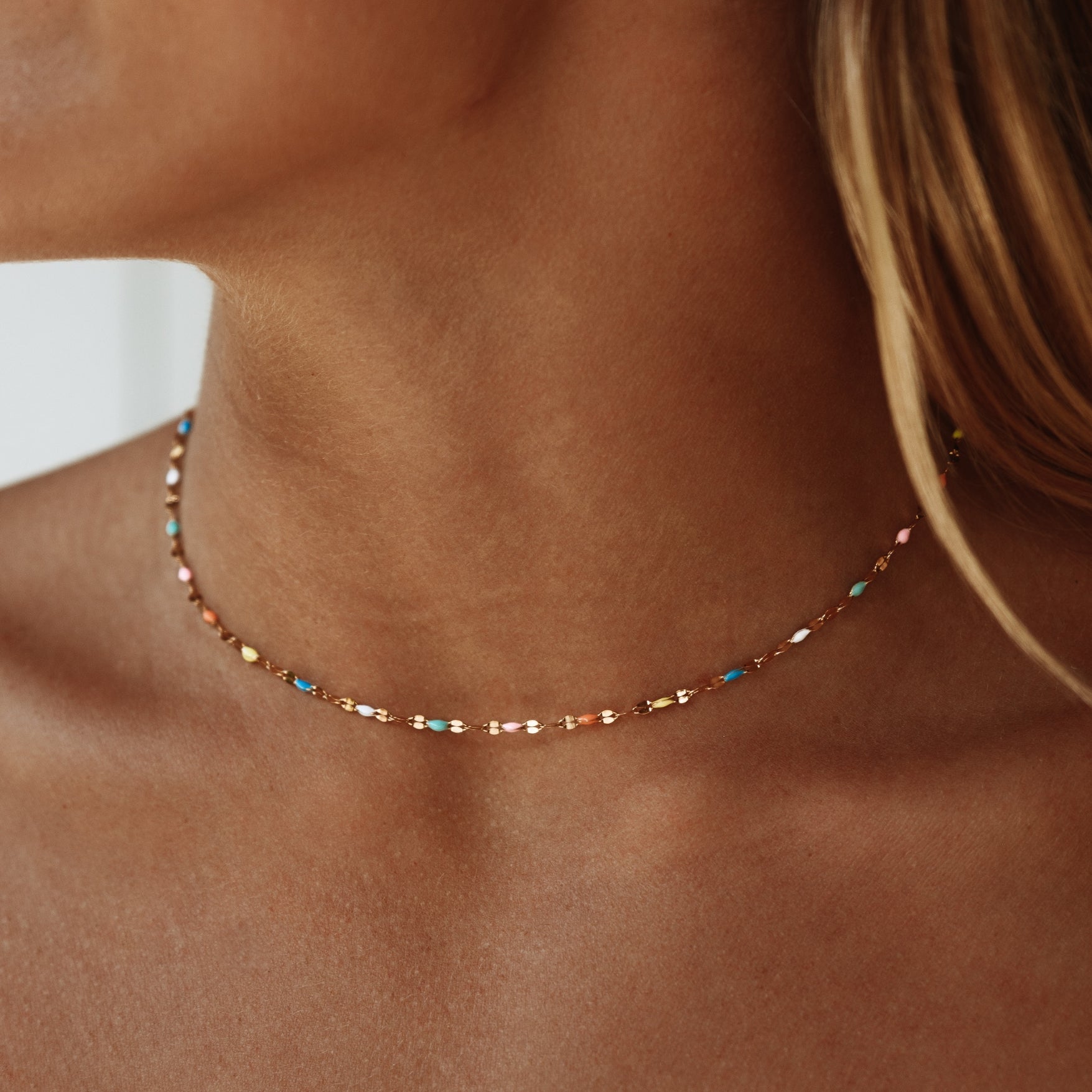
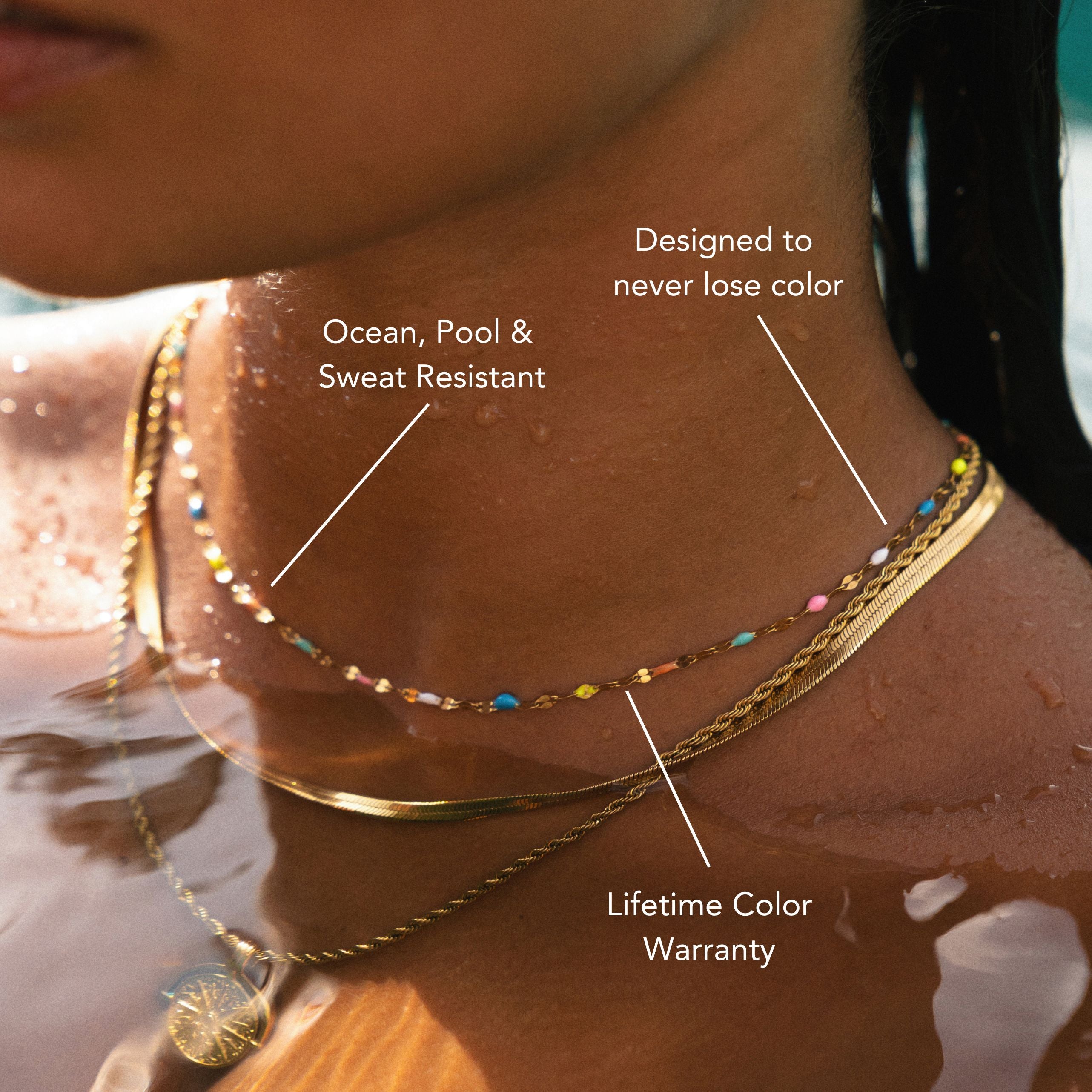
Look for a material guarantee. Brands confident in their base metal and coating specifications back them with warranties. ATOLEA's tarnish-free range is built on PVD-coated 316L stainless steel throughout, with a lifetime color warranty on every piece. That warranty is only sustainable if the base metal and coating genuinely perform as described through sweat, water, and daily skin contact, which means it functions as a proxy for material quality verification.

Frequently Asked Questions
What jewelry doesn't turn skin green?
Jewelry made from PVD-coated stainless steel, solid gold at 14k and above, platinum, titanium, and uncoated surgical-grade stainless steel (316L) does not turn skin green. None of these materials contain exposed reactive copper at the skin contact surface, which eliminates the copper carbonate reaction that causes green discoloration. Standard gold-plated brass, copper, and bronze jewelry all cause green skin once the reactive base metal reaches skin contact.
Why does jewelry turn my skin green but not someone else's?
The reaction depends on the acidity of your skin chemistry, how much you sweat, and how much water and product contact the jewelry encounters. More acidic skin chemistry accelerates the copper carbonate reaction, which is why people with higher skin acidity experience green discoloration faster and more severely from the same piece. It is a skin chemistry variable rather than a reflection of hygiene or sensitivity.
Does sterling silver turn skin green?
Sterling silver turns skin green occasionally in some people, but less consistently than copper or brass. The 7.5 percent copper content in sterling silver is low enough that most people do not experience the reaction. People with more acidic skin chemistry or who wear sterling silver in humid or sweaty conditions are more likely to see occasional mild greenish marks. The more common issue with sterling silver is tarnishing (gray-black oxidation) rather than green skin.
Can gold jewelry turn your skin green?
Solid gold at 14k and above does not turn skin green under normal wearing conditions. The gold content at 14k is high enough that the copper in the alloy is encapsulated and does not release ions at levels that cause discoloration. Gold-plated jewelry, which has a reactive base metal beneath the gold layer, absolutely does cause green skin once the plating wears away, which is why the distinction between solid gold and gold-plated is critical when evaluating a purchase.
How do I stop my jewelry from turning my skin green?
The most reliable solution is switching to a base metal that does not contain reactive copper: PVD-coated stainless steel, solid gold at 14k and above, titanium, or platinum. Short-term workarounds like clear nail polish over the contact surface reduce the reaction temporarily but wear off and require repeated reapplication. Addressing the base metal rather than the symptom is the permanent solution.
Conclusion
What jewelry doesn't turn green comes down to one variable: copper content in the base metal. Materials with no exposed reactive copper at the skin contact surface do not produce the reaction. PVD-coated 316L stainless steel, solid gold at 14k and above, platinum, and titanium all qualify. Of those, PVD-coated stainless steel delivers that clean skin contact at everyday accessible pricing through gym sessions, beach days, ocean swims, and daily wear without the maintenance requirements or cost of fine metals. The base metal specification is the one check that separates jewelry that stays clean from jewelry that stains.






Leave a comment
This site is protected by hCaptcha and the hCaptcha Privacy Policy and Terms of Service apply.