

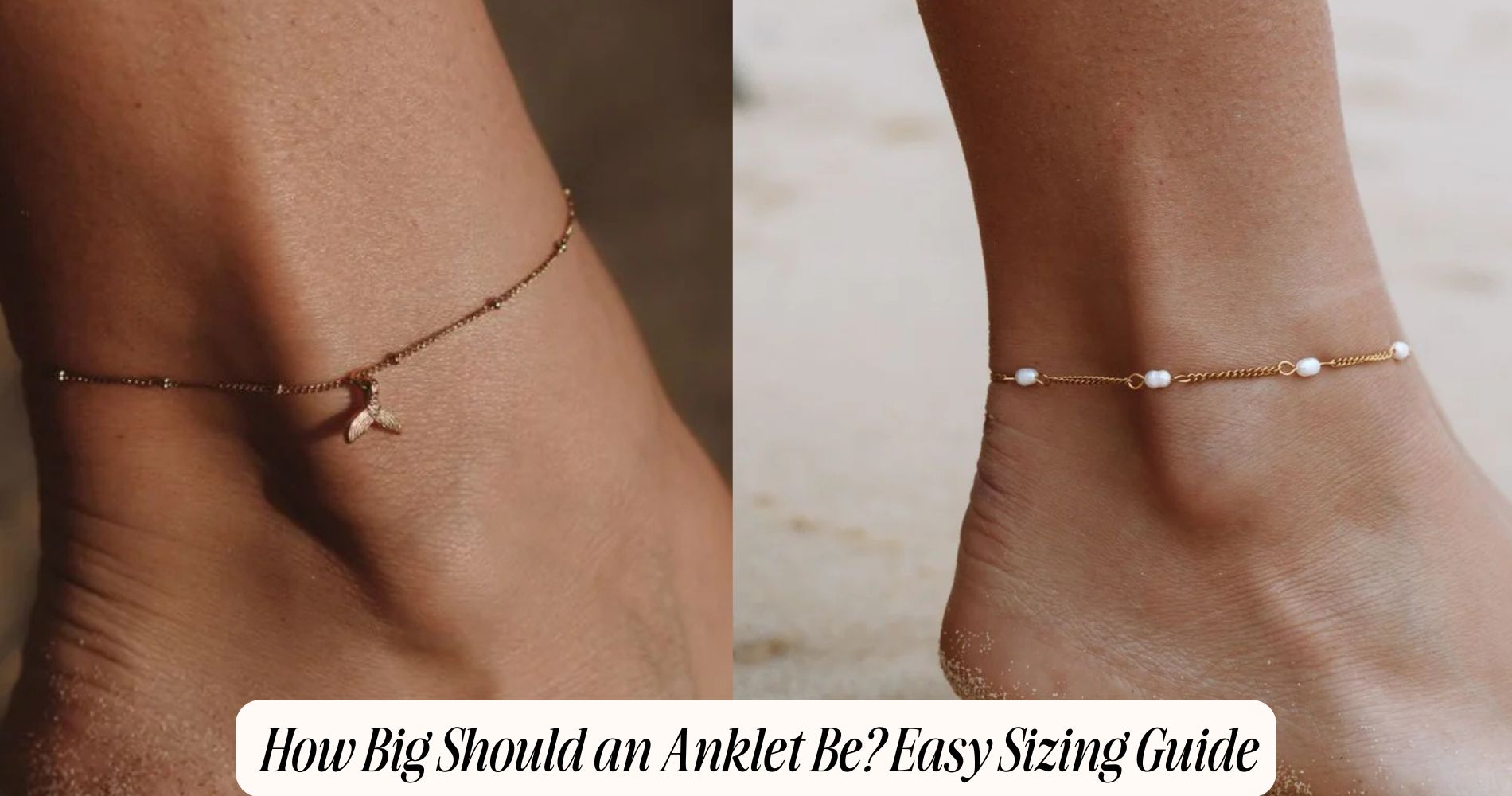
How Big Should an Anklet Be? Easy Sizing Guide
If you’re wondering how big should an anklet be, the answer depends on both comfort and style. As a general rule, you’ll want your anklet about 0.5–1 inch longer than your ankle’s exact circumference so it rests at the narrowest point above the ankle bone with a gentle drape. While most adult sizes fall between 9–10 inches, it’s best to measure with a flexible tape, then choose a snug fit (add ¼–½"), a classic fit (½–¾"), or a loose boho fit (1"). Factors like chain weight, charms, and even daily swelling can all influence the perfect size. For all-day wear, many people choose pieces from our waterproof anklet collection to ensure the fit stays comfortable and stylish no matter the activity.
Understanding Standard Anklet Sizes
Understanding standard anklet sizes starts with knowing the typical length ranges and how they correspond to different fits. Most adult anklets run from 8 to 11 inches, with 9–10 inches considered the core “standard” range.
You’ll usually see three fit categories: snug (add about ¼–½ inch of ease), classic drape (add ½–1 inch), and loose or boho (add 1–1½ inches).
You also need to factor in anklet materials and construction. Heavier chains, gemstone strands, or beaded designs often feel tighter and may require an extra ¼ inch.
Flexible cords, micro-chains, and thread pieces sit closer to the skin. Current anklet trends favor adjustable extenders, letting you fine‑tune length for layered looks and asymmetrical styling.
How to Measure Your Ankle at Home
Measuring your ankle at home takes just a few careful steps and gives you the precision you need for a perfect anklet fit.
Sit with your foot flat and your leg relaxed, since tension can distort your ankle circumference measurement. Locate the narrowest point above your ankle bone or the exact spot where you’d like the anklet to sit; consistent placement matters for style and symmetry between both ankles.

Use a flexible sewing tape for the most accurate tape measure technique. Wrap it around your ankle, keeping it level, snug, and flat against the skin, without squeezing. Read the number where the tape overlaps.
If you don’t have a tape, wrap a non-stretch string, mark it, then measure it against a ruler.
How Much Length to Add for the Perfect Fit
Once you’ve got your exact ankle measurement, the next step is deciding how much extra length to add so the anklet sits the way you want.
Most people add 0.5–1 inch (about 1.25–2.5 cm) to convert a bare measurement into a comfortable anklet length.
Think about your fit preferences first. For a sleek, close‑fitting look that won’t dig in, add around 0.5 inch. For a classic, easy‑wear drape with slight movement, add about 0.75 inch. If you like a relaxed, boho hang that pools slightly over the back of your heel, add a full inch.
Also consider swelling from heat, walking, or travel. If your ankles tend to puff up, lean toward the more generous increment.
Adjusting Size for Different Chain Styles
Although your ankle measurement stays the same, different chain styles can dramatically change how an anklet feels and fits on your leg. Each chain type has its own drape, visual weight, and flexibility, so you’ll need to make subtle fit adjustments.
For slim, fluid styles like cable or curb chains, you can stick close to your base size because they contour smoothly around the ankle bone.
Heavier chain type options—such as mariner, figaro, or rope—often need an extra 0.25–0.5 inches so they don’t dig in when you walk.
Flat herringbone or omega chains require slightly more ease to prevent kinking, especially at the front of the ankle.
When in doubt, size up minimally and rely on a short extender for micro-adjustments.
Sizing Tips for Charm, Beaded, and Layered Anklets
Chain style isn’t the only factor that affects fit—charms, beads, and stacking add bulk and movement that you need to account for.
For charm anklet styles, add at least 0.25–0.5 inches to your usual chain measurement so dangling elements can drape cleanly instead of stabbing into your ankle when you walk. Heavier charms may require another 0.25 inches.

With beaded anklet materials, the bead diameter matters. For tiny seed beads, keep your normal size. For medium (4–6 mm) beads, add 0.25 inches; for chunky (8 mm+) beads, add 0.5 inches so the circular bead profile doesn’t feel tight.
When layering two or three anklets, size the lowest strand 0.25–0.5 inches longer so each layer sits distinctly.
Anklet Fit for Bare Ankles vs. With Socks or Shoes
Because your ankle circumference subtly changes with what you’re wearing, you should size anklets differently for bare skin, socks, and shoe-aware styling.
For barefoot wear, aim for a close, draped fit: usually your exact ankle measurement plus 0.25–0.5 inches so the chain skims the bone without spinning wildly.
When you style anklets over thin socks, add roughly 0.5 inches to preserve anklet comfort levels and prevent elastic or ribbing from bulging.
For chunkier socks or athletic looks, you may need a full extra inch so the anklet sits flat instead of digging in.
With sandals, keep the fit similar to barefoot sizing; with sneakers or boots, follow over-sock measurements and consider current seasonal anklet trends, like chunky chains or layered sets.
Common Sizing Mistakes to Avoid
Mistakes in anklet sizing usually come from guessing instead of measuring, misjudging drape, or ignoring how your ankle moves.
You might rely on sizing misconceptions like “my bracelet size equals my anklet size” or “one size fits all,” which often leads to pinching or gaping.
Another error is measuring flush against the skin and skipping the allowance for ease, so the anklet rides up to the narrowest part of the leg.
You also risk problems when you overlook hardware bulk. Clasps, charms, and multi-strand designs can shorten the wearable length, so you must factor them into your measurements.
Finally, you may forget planned fit adjustments; if you’ll swap chains, add extenders, or layer pieces, you need extra length from the start.
Size Guide by Body Type and Personal Style Preferences
While anklet sizing always starts with your actual ankle measurement, the ideal length and drape depend heavily on your body type and how you like to style your jewelry.
When you factor in body type considerations, think regarding proportion and visual balance. If you have slimmer ankles, a 1–1.5 inch extension bey

ond your fitted measurement creates a delicate, fluid drape. For fuller ankles, add 1.5–2 inches for ease and comfort without cutting in.
Your anklet style preferences matter just as much. Minimal chains or tennis designs look best slightly fitted; boho charms or beaded styles need more play to prevent stiffness.
If you stack anklets, size one piece close-fitting and let others graduate slightly longer.
Frequently Asked Questions
Can I Resize an Anklet That’s Already Too Small or Too Big?
You can usually resize it using anklet resizing techniques like adding extender chains, removing links, or restringing beads. For delicate metals or gem-set pieces, choose professional jewelry alteration to preserve structure, finish, proportions, and clasp alignment.
How Should I Store Anklets to Prevent Tangling and Damage?
You store anklets flat or hanging separately; you’ll prevent tangles by using compartmentalized trays, mini zip bags, or a jewelry roll. For anklet storage tips, wipe pieces first, close clasps, avoid humidity, and separate metals.
Are Certain Anklet Sizes Better for Sensitive or Chafing-Prone Skin?
Yes. You’ll want a slightly looser fit, letting the anklet skim rather than grip. Prioritize hypoallergenic anklet material (titanium, surgical steel, 14k gold) to minimize skin sensitivity, friction hot spots, micro-abrasions, and moisture-trap irritation.
Do Men’s Anklets Follow Different Sizing Rules Than Women’s Anklets?
You don’t follow different rules; men’s anklets usually just run longer. You’ll rely on unisex sizing charts, prioritize adjustable chains, and choose lightweight, skin-friendly anklet materials to prevent bulk, pinching, or an unbalanced visual line around the ankle.
How Does Anklet Size Affect Comfort During Sports or Swimming Activities?
Anklet size directly influences sports comfort: if anklet fit’s too loose, it snags or chafes; too tight, it restricts circulation and flexion. You’ll want a streamlined, low-profile chain or cord, with minimal dangle, corrosion-resistant hardware.
Conclusion
Now you’ve got the tools to size anklets like a pro. Measure your ankle, add your preferred drape, then factor in chain style, bead bulk, and charms. Decide if you’ll wear it barefoot or over socks, and adjust accordingly. Keep extenders, clasp types, and layering in mind so everything sits smoothly. When you balance comfort, proportion, and personal style, every anklet feels custom-made—and looks intentionally styled, not accidental.






Leave a comment
This site is protected by hCaptcha and the hCaptcha Privacy Policy and Terms of Service apply.