


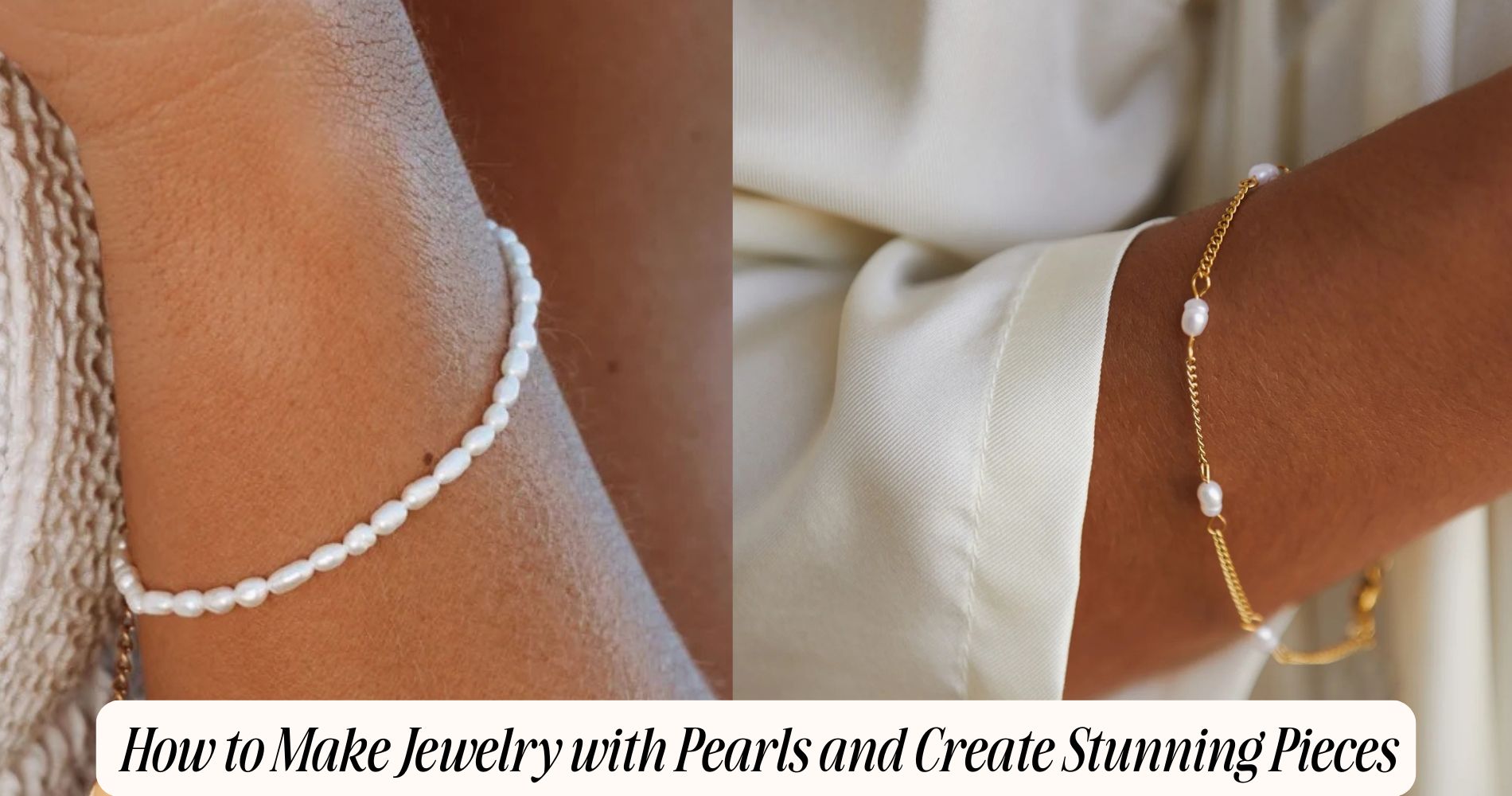
How to Make Jewelry With Pearls and Create Stunning Pieces
If you’re learning how to make jewelry with pearls, start by selecting the right type of pearl—choose soft, organic freshwater pearls for relaxed, everyday pieces or opt for structured saltwater varieties like Akoya, Tahitian, or South Sea for a high-polish, elegant look. For inspiration on styles and combinations, explore Atolea’s pearl bracelets to see how different pearl types can elevate a design. Gather round-nose pliers, chain-nose pliers, flush cutters, silk thread, French wire, and petite pearl clasps. Pre-stretch your cord, map out your layout on a bead board, then string and knot with steady tension to create a smooth, fluid drape. Finally, match pearl tones to metals—white with yellow gold or silver-gray with sterling—to achieve beautifully balanced results.
Understanding Different Types of Pearls
A clear understanding of pearl varieties lets you design jewelry with intention, matching each piece to a specific mood, texture, and level of refinement.
You’ll work mainly with freshwater pearls and saltwater pearls, each offering distinct visual and tactile qualities.
Freshwater pearls typically feel softer in character: off-round shapes, subtle surface ripples, and a gentle, satin luster. They’re ideal when you want relaxed elegance, organic lines, and layered, textural strands.

Saltwater pearls bring more structure and formality. Akoya pearls give you high, mirror-like luster and classic round silhouettes.
Tahitian pearls introduce deeper body colors—charcoal, peacock, aubergine—perfect for dramatic focal points.
South Sea pearls, with their large size and soft glow, suit statement pieces where luminous volume and quiet luxury matter.
Essential Tools and Materials for Pearl Jewelry
Once you know which pearls you want to work with, your hands need tools and materials that respect their delicacy. Start your tools checklist with fine round-nose pliers, smooth chain-nose pliers, and flush cutters that leave clean, minimal marks on metal.
Add bead reamers for refining drill holes, plus soft bead mats to prevent scratches and runaway pearls.
For material selection, choose high‑quality silk or nylon beading thread, matched to pearl size, and specialized pearl clasps with graceful, compact profiles.
Stock French wire (bullion) to protect thread at connection points, and sterling silver or gold-filled findings that visually echo your pearls’ undertones.
Finally, include gentle adhesive and ultra-fine needles that slide through drill holes without bruising nacre.
Designing Pearl Necklaces, Bracelets, and Earrings
Designing pearl necklaces, bracelets, and earrings starts with how you want pearls to interact with light, skin tone, and metal.
Begin by choosing pearl color combinations: classic white with yellow gold for warmth, cream with rose gold for softness, or silver-gray with sterling for a cool, modern edge. Let your palette guide every component—metal finish, clasp profile, and even spacer beads.
Next, think through necklace length choices: a 16" choker frames the collarbones; an 18" princess length suits most necklines; opera or rope lengths feel dramatic and elongating.
For bracelets, balance pearl size with wrist width so strands curve elegantly, not stiffly. With earrings, relate pearl scale to face shape, ensuring movement without visual heaviness.
Step-by-Step Techniques for Stringing and Knotting Pearls
Thread tension becomes the backbone of professional pearl stringing, and learning to control it starts with methodical, hands-on steps.
Begin by choosing a silk or synthetic cord that matches your pearls’ drill holes, then pre-stretch it to minimize future slack. Attach a clasp to one end with a secure double or French wire connection.

Plan your stringing patterns on a bead board, aligning pearl sizes and subtle color shifts before threading.
Slide on the first pearl, then form a simple overhand knot snugly against it, using knotting tweezers or an awl to place the knot precisely. Continue alternating pearls and knots, keeping each knot identical in size.
Periodically check drape and micro-adjust tension so the strand falls in a fluid, graceful line.
Combining Pearls With Metals, Crystals, and Other Beads
With your knots even and your strand moving with a clean, supple drape, you can start treating pearls as structural elements within richer material combinations.
Think regarding contrasts: gloss against sparkle, cool metal beside soft nacre. Explore pearl color combinations by pairing warm cream or champagne pearls with gold-filled beads, or icy white and silver-gray pearls with oxidized sterling for a cooler register.
Apply precise metal selection tips: choose finer gauges for delicate, floating designs; use heavier chain, wire, or geometric spacers when you want graphic structure.
Introduce crystals as light points—Swarovski or high-quality glass rondelles between pearls sharpen the line. Matte gemstone rounds, wood, or seed beads soften shifts and keep the pearls visually dominant.
Care, Storage, and Styling Tips for Your Pearl Creations
Even the most thoughtfully designed pearl pieces lose their magic if you neglect their surfaces, strain their silk, or store them where metals tarnish against nacre. For effective pearl maintenance, wipe each piece with a soft, damp microfiber cloth after wearing to remove skin oils, scent, and hairspray.
Avoid ultrasonic cleaners, abrasives, and hot water; they erode luster and weaken drill holes.
Prioritize storage solutions that respect pearls as organic gemstones. Keep strands flat, not hanging, so silk doesn’t stretch. Use individual, fabric-lined compartments or pouches, never plastic bags that trap moisture.

Separate pearls from harder stones and metals to prevent scratching. For styling, let pearls touch skin—necklines, wrists, and earlobes—so their glow contrasts beautifully with natural tones and textures.
Frequently Asked Questions
Can I Ethically Source Pearls, and How Do I Verify Responsible Harvesting Practices?
You can ethically source pearls by choosing certified farms, demanding traceability, and scrutinizing harvesting practices. You review sustainability reports, look for third‑party audits, visit operations virtually, and favor small-scale farms prioritizing ecosystem health, clean waters, and mollusk welfare.
How Do I Price and Sell My Handmade Pearl Jewelry for Profit?
You price and sell profitably by doing cost analysis on pearls, findings, labor, and packaging, then using market research to benchmark. Highlight luster, overtone, surface quality, and metal pairings in atmospheric photos, luxe branding, and limited, material-driven collections.
What Are Common Beginner Mistakes When Working With Pearls, and How Can I Avoid Them?
You mis-drill pearls, crush nacre with metal tools, use harsh cleaners, knot inconsistently, and neglect thread tension. To avoid pitfalls and common mistakes, measure meticulously, practice on beads, cushion tools, choose silk or nylon, and inspect luster constantly.
Can I Repurpose Heirloom Pearl Jewelry Into Modern Designs Without Damaging Value?
You can, but treat it as heirloom restoration: document the original, reuse pearls intact, and keep signature elements. Collaborate with a skilled jeweler to reinterpret settings, achieving modern aesthetics while preserving material integrity and provenance-driven value.
How Do I Photograph Pearl Jewelry so It Looks Accurate and Appealing Online?
You photograph pearl jewelry by using soft, diffused lighting techniques, avoiding harsh reflections. Place pieces on matte, neutral background choices, add a subtle reflector, shoot close with accurate white balance, and angle pearls to reveal gentle, dimensional luster.
Conclusion
As you finish your first pearl pieces, pause to admire the weight, luster, and rhythm of each bead and knot. You’ve learned to choose the right pearls, handle silk thread, and balance metal, crystal, and glass details. Now, experiment with lengths, textures, and asymmetry. Store your creations carefully, style them thoughtfully, and let each necklace, bracelet, and earring reflect your eye for precise craftsmanship and quietly luxurious design.





Leave a comment
This site is protected by hCaptcha and the hCaptcha Privacy Policy and Terms of Service apply.