


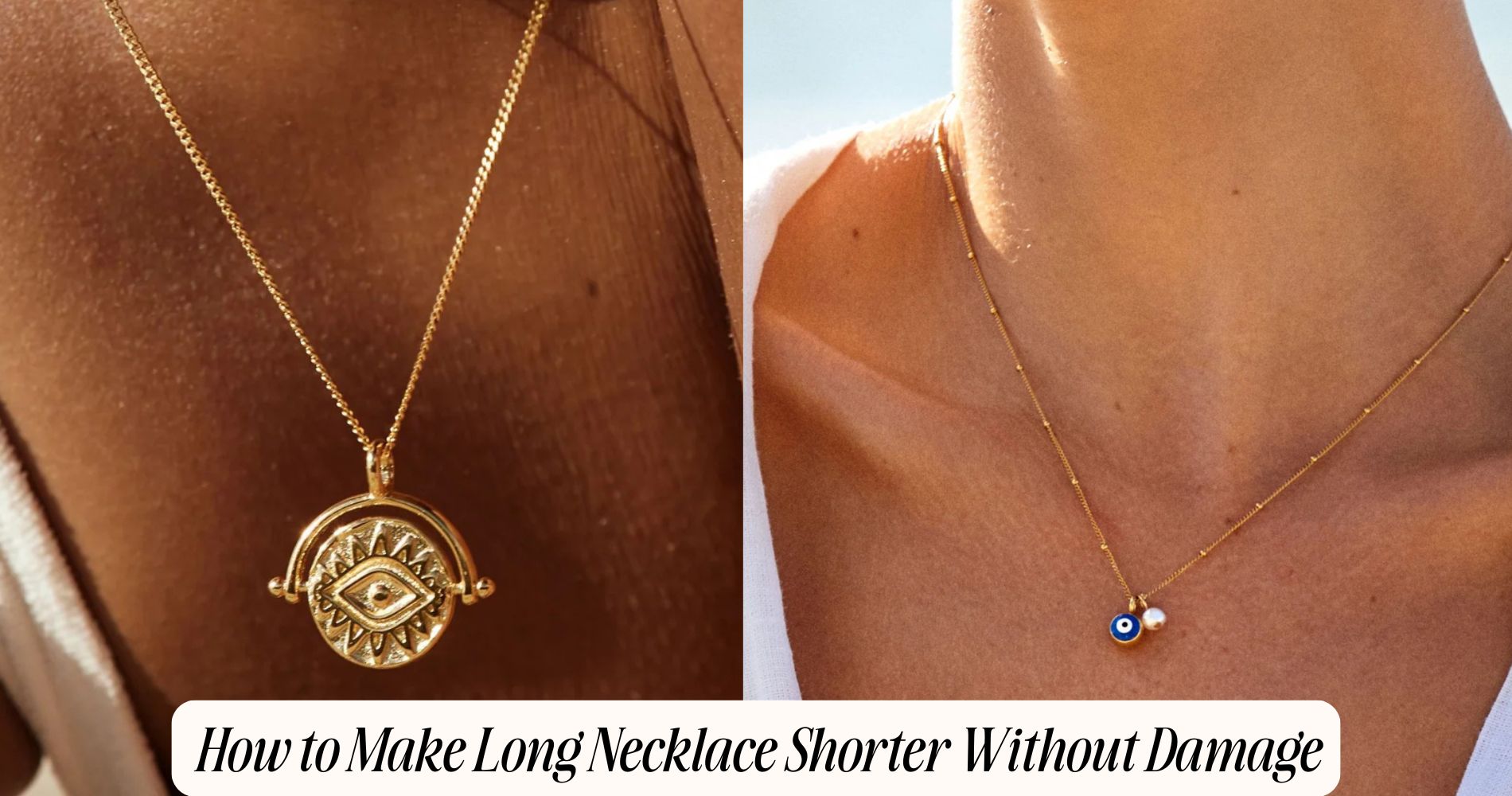
How to Make Long Necklace Shorter Without Damage
If you’re wondering how to make long necklace shorter, there are several safe, non-destructive methods that protect both the structure and the materials of your piece. You can slide on an adjustable stopper bead to pull excess chain behind your neck or hook the clasp into a sturdier link higher up the chain. For very long, flexible designs—like the ones in our long pendant necklace collection - you can also double the necklace around your neck or use a slim ribbon to bridge the clasp and end ring. These simple tricks keep soldered links and plating stress-free while giving you more styling options.
Assessing Your Necklace Style and Desired Length
Before you shorten anything, define how you want the necklace to sit on the body and how that interacts with its construction. Visualize where the focal point should rest: suprasternal notch, collarbone, sternum, or mid-torso. Anchor your length preferences to those anatomical landmarks.
Next, analyze necklace styles and structure. Note chain type (cable, rope, box, snake), wire gauge, and flexibility. Identify fixed elements—pendants, stations, hinges, integrated clasps—that determine how weight distributes and how the drape behaves when shortened.
Check material: solid gold, gold‑filled, plated, sterling, base metal, or textile. Each tolerates stress differently and may reveal tool marks more readily. Confirm whether links are soldered or open; that’ll dictate where you can safely remove length without distorting the overall design.
Using Adjustable Chain Sliders and Stoppers
An adjustable chain slider or stopper lets you shorten a necklace non‑destructively by redirecting and locking excess length along the chain itself.
You thread the chain through the slider’s internal channel, then pull to create a smaller loop that sits higher on your neckline while the surplus length drapes neatly behind.
Choose sliders and stoppers that match your necklace accessories in metal color, finish, and scale.

For fine adjustable chain, use compact silicone‑lined beads that grip without scratching. For heavier links, select robust metal sliders with polished edges to prevent abrasion.
Always confirm the internal diameter fits the chain snugly but not tightly, so the mechanism glides smoothly yet holds tension, preserving both function and the necklace’s visual balance.
Shortening With Clasp Repositioning Tricks
One of the cleanest ways to shorten a necklace without cutting it's to reposition how and where the clasp engages the chain. You fundamentally create a new, temporary endpoint by hooking the clasp into a different link or component.
First, examine clasp types. Lobster and spring-ring clasps work best because they securely catch individual links or small jump rings.
Then study your necklace materials: fine cable or curb chains offer many anchor points, while bead-and-wire constructions may have only a few reinforced links near the back.
To shorten, attach the clasp to a link several centimeters up the chain, then let the surplus length fall neatly behind your neck. Confirm the chosen link is fully closed and robust enough to withstand tension.
Doubling and Layering Techniques for Long Chains
For very long chains that overwhelm your neckline, doubling and layering lets you shorten the visual drop without permanently altering the piece.
First, assess chain flexibility: fine cable, rolo, or snake chains handle a doubling technique cleanly, while stiff omega or herringbone chains may kink if sharply bent.
To double, pass the chain around your neck twice, aligning both segments so the clasp rests discreetly at the back.
Verify the doubled length doesn’t stress soldered joints or delicate gemstone stations.
For a refined layering style, mix the doubled chain with other necklaces that match metal color and finish.
Balance visual weight by placing chunkier links lower and lighter, finer links closer to the neck for a controlled, intentional silhouette.
Temporary Shortening With Ribbon, String, or Thread
Sometimes the cleanest way to shorten a necklace temporarily is to introduce a secondary material—ribbon, string, or strong thread—that acts as an external extender-turned-shortener.
You fundamentally redirect where the necklace closes, without stressing the original clasp or links.

Cut a length of satin or grosgrain ribbon, then form small, secure ribbon knots around each end ring or clasp hook. The ribbon carries the load, so choose a width and weave strength proportional to the necklace’s weight.
For finer chains, use waxed thread or silk cord. Create adjustable string loops: lark’s head or sliding knots let you micro‑tune length at the nape.
Always test tension by pulling gently, then check that the added material visually integrates with metal color and pendant scale.
Creative Use of Safety Pins, Brooches, and Clips
Rerouting the clasp with ribbon or thread isn’t your only low-impact option; hardware you already own—safety pins, brooches, and discreet clips—can also anchor a shorter length with structural integrity and visual intent.
Use safety pin techniques on the back of the neck: feed the chain through the pin’s loop, then close it through a sturdy link, effectively creating a new, temporary clasp point.
Choose smooth, nickel-free pins to avoid abrasion or allergic reaction, and conceal them under hairlines or collars.
For brooch styling, drape the necklace to your desired height, then pass the brooch pin through two parallel chain segments.
This locks in the new length while turning the brooch into a deliberate focal element rather than a hidden fastener.
Adapting Pendants and Charms Without Altering the Chain
Even when the chain length stays fixed, you can radically change how short a necklace appears by reconfiguring how pendants and charms attach and hang.
Through pendant adaptation, you effectively “pull up” visual weight, making the necklace read shorter on your neckline.
First, replace tiny bails with larger, oval bails or enhancer clasps so pendants can sit over multiple strands or doubled sections of chain. This raises the drop point without cutting links.

You can also slide multiple small charms onto a shared carrier bead or charm bar, condensing them higher on the décolletage.
For delicate metals, choose closed jump rings in matching alloy and gauge.
Aim for balanced proportion: heavier focal pieces belong closer to the clavicle, while lighter charm modification works higher without distorting drape.
Storing and Caring for Adjusted Necklaces Safely
When you alter a necklace’s length, you also change its stress points, so deliberate storage and care prevent premature fatigue in links, bails, and added components. Treat every adjusted piece as slightly more delicate, especially where jump rings, extenders, or sliders meet the original chain.
Prioritize vertical necklace organization: hang each necklace individually to avoid tangling that torques fine links.
For travel or drawer storage, coil necklaces in loose circles and place them in soft, non-abrasive protective pouches, separating plated, sterling, and high-karat pieces to minimize galvanic reactions and micro-scratching.
Wipe skin oils away with a lint-free cloth before storing. Keep necklaces away from humidity, perfume, and hairspray, which accelerate tarnish and weaken soldered joints and plated finishes.
Frequently Asked Questions
Can I Safely Shorten Beaded or Pearl Necklaces Without Restringing Them?
You usually can’t safely shorten beaded or pearl necklaces without restringing; bead removal and knot tying alter tension, spacing, and drape, risking frayed thread, gapping, and loss of structural integrity, especially with silk or graduated, delicately drilled pearls.
How Do I Discreetly Shorten a Necklace While Wearing High-Neck Clothing?
You discreetly shorten it by clipping a micro extender or lobster-clasp chain to itself at the nape, creating a hidden loop. This Necklace adjustment techniques approach preserves drape, guarantees High neck outfit compatibility, and avoids structural stress.
Are There Professional Services That Temporarily Shorten Necklaces for Events?
Yes, you can use temporary jewelry services through high-end boutiques or mobile jewelers; they’ll add removable extenders, micro-clasps, or ribbon ties, offering material-safe, reversible adjustments and event styling options tailored to your necklace’s metal, weight, and design.
What Tools Should Beginners Avoid When Attempting Any DIY Necklace Shortening?
You should avoid dull wire cutters, oversized needle nose pliers, soldering irons, and rotary tools; they crush soft metals, scar plating, distort chain geometry, weaken solder joints, and permanently compromise the necklace’s aesthetic and structural integrity.
Can Necklace-Shortening Methods Cause Allergic Reactions With Sensitive Skin or Metals?
Yes, they can. When you alter chain links or add findings, you expose fresh surfaces that may aggravate metal allergies and sensitive skin. Use hypoallergenic metals, sealed jump rings, and inert coatings to minimize ion transfer and irritation.
Conclusion
Now you know how to control length without harming the chain’s integrity, finish, or hardware. As you experiment with sliders, clever clasp moves, discreet ties, and layered drapes, you’ll tune each necklace to your neckline, pendant weight, and metal type. Prioritize gentle tension, smooth contact points, and tangle‑free storage, and you’ll extend the life of every piece—keeping its proportions clean, its movement fluid, and its surfaces luminous over time.






Leave a comment
This site is protected by hCaptcha and the hCaptcha Privacy Policy and Terms of Service apply.